

















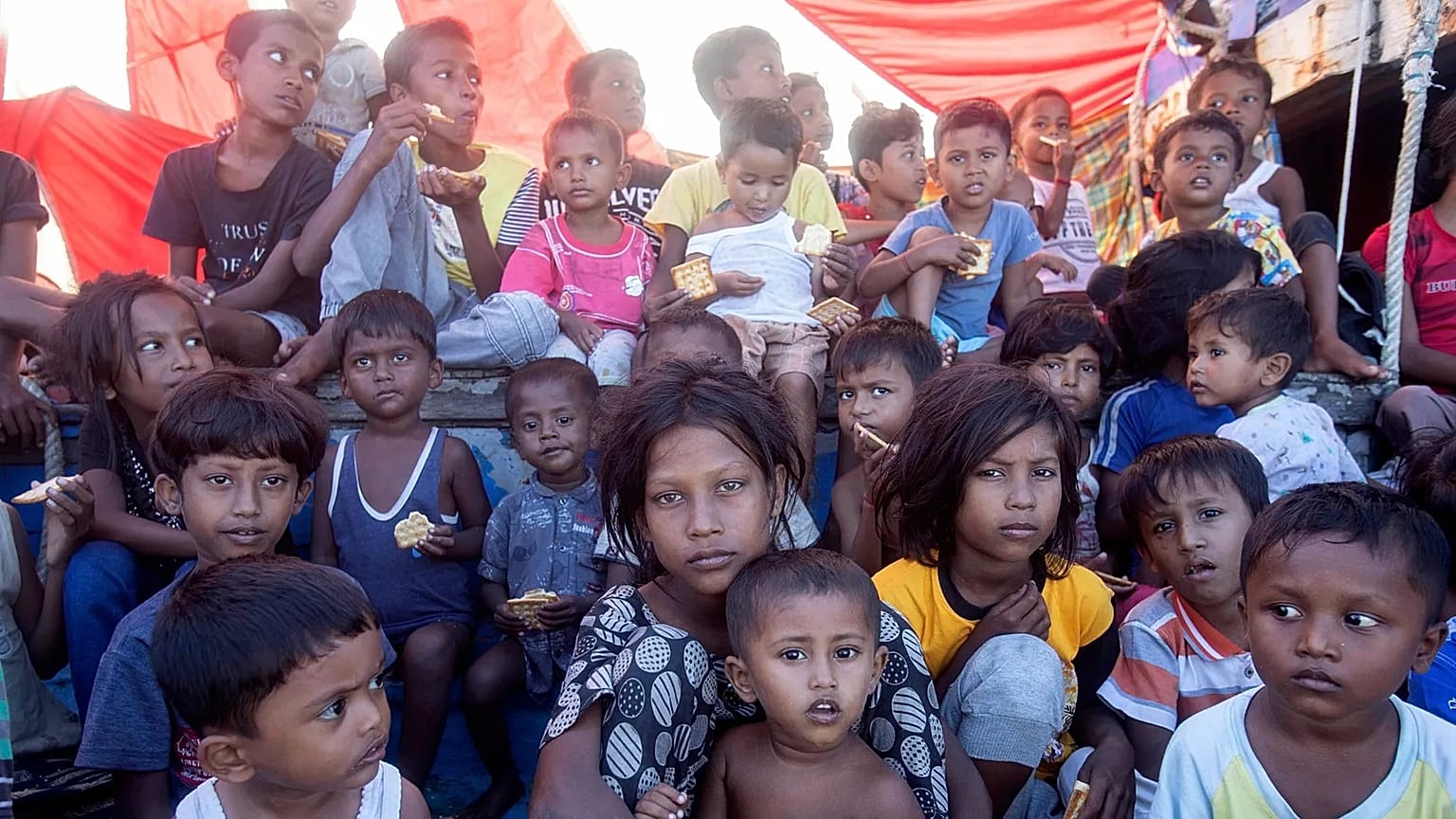













Though the US spent just 1% of its budget on foreign aid, Trump dubbed USAID wasteful and shut it down, a move that has proven catastrophic for the world's most vulnerable.
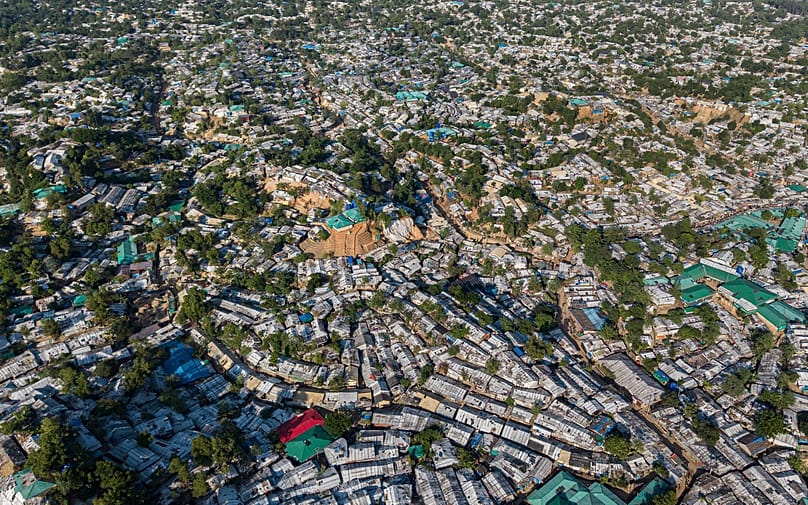
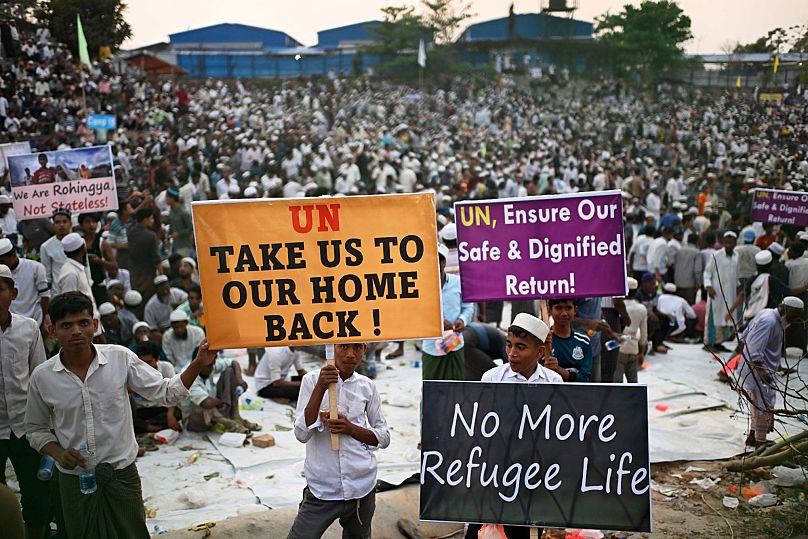
Life has always been dangerous for the 600,000 Rohingya children who live in chaotic, overcrowded refugee camps in Bangladesh, but the US administration’s decision in January to dismantle the US Agency for International Development (USAID) has made life even harder.
That's what the Associated Press news agency found in interviews with 37 children, family members, teachers, community leaders and aid workers.
Violations against children in the camps have risen sharply this year, according to UNICEF, the United Nations’ children's agency.
Between January and mid-November, reported cases of abduction and kidnapping more than quadrupled over the same time period last year, to 560 children.
And there has been an eightfold increase in reports of armed groups' recruitment and use of children for training and support roles in the camps, with 817 children affected.
Many members of the armed groups are battling a powerful ethnic militia across the border in Myanmar. The actual number of cases is likely higher due to underreporting, according to UNICEF, which lost 27% of its funding due to US aid cuts and subsequently shuttered nearly 2,800 schools.
"The armed groups, with their roots in Myanmar, are operating in the camps, using the camps as a fertile ground for recruiting young people," says Patrick Halton, a child protection manager for UNICEF.
"Obviously, if children are not in learning centres and not in multipurpose centres, then they’re more vulnerable to this."
Verified cases of child marriage, which the UN defines as the union of children under age 18, rose by 21% and verified child labour cases by 17% in the year to September, compared to the same time period last year.
Those statistics are also likely to be a significant undercount, says Halton.
"With the funding cuts, we had to downscale a lot in terms of the education," Halton says. "It's meant that children have not necessarily had things to do, and we've therefore seen this rise in children being married, children being in child labor."
Though the US spent just 1% of its budget on foreign aid, Trump dubbed USAID wasteful and shut it down, a move that has proven catastrophic for the world's most vulnerable.
In Myanmar, the AP found that aid cuts have caused children to starve to death, despite Secretary of State Marco Rubio’s statement to Congress that "No one has died" because of the dissolution of USAID.
A study published in The Lancet journal in June said the US funding cuts could result in more than 14 million deaths, including more than 4.5 million children under age 5, by 2030.
In the Bangladesh camps, the US, which has long been the biggest provider of aid to the predominantly Muslim Rohingya, slashed its funding by nearly half compared to last year.
The overall Rohingya emergency response is only 50% funded for 2025 and aid agencies say next year is expected to be far worse.
In a statement to the AP, the State Department said the US has provided more than $168 million (€143 million) to the Rohingya since the beginning of Trump's term, although data from the UN’s financial tracking service show the US contribution in 2025 is $156 million (€133 million).
Asked about the disparity, the State Department said the UN's financial tracking service had not been recently updated and "generally does not show the latest information on all US funding."
The department said it had "advanced burden sharing and improved efficiency" in the Rohingya response, resulting in 11 countries increasing their funding by more than 10% year on year, collectively contributing $72 million (€61 million).
"The Trump Administration continues to pursue the diplomatic efforts to encourage additional countries to help shoulder the burden," the statement said.
Schools shuttered
When the schools shut down, hundreds of underage girls, some as young as 14, were married off, says Showkutara, executive director of the Rohingya Women Association for Education and Development.
Her network of contacts across the camps have also reported an increase in kidnapping and trafficking, as well as a huge surge in the prostitution of girls as young as 12 since the aid cuts.
"After the school closures, they had no space to play. That’s why they're playing on the roads, far away from their blocks," says Showkutara, who goes by one name. "There are some groups who are targeting the children."
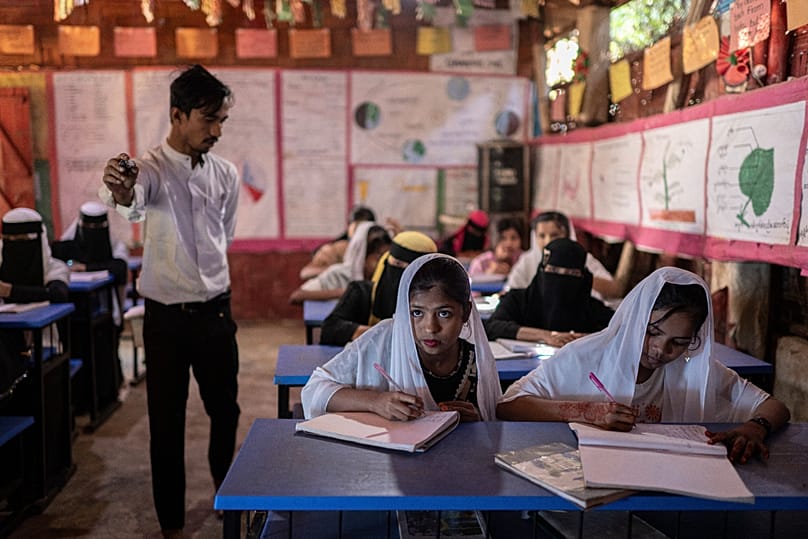
While UNICEF managed to repurpose some of its remaining funding, enabling the agency to recently reopen most of its learning centres, scores of schools run by other aid groups are still shut and thousands of children remain out of class.
Aid workers are anticipating even steeper funding cuts next year, leaving the schools' futures uncertain.
Save the Children has only secured a third of its funding target for life-saving services for 2026, meaning 20,000 children attending its schools are at risk of losing their education starting in January, says Golam Mostofa, the group’s area director for Cox’s Bazar, the closest city to the camps.
Meanwhile, Showkutara says, the children locked out of learning by the initial closures are forever lost: Both metaphorically, in the case of girls like Hasina who were married off to men who will never let them return to school even if they reopen, and literally, in the case of children who vanished into the trafficking network.
"It's too late," she says.
'My heart is still crying'
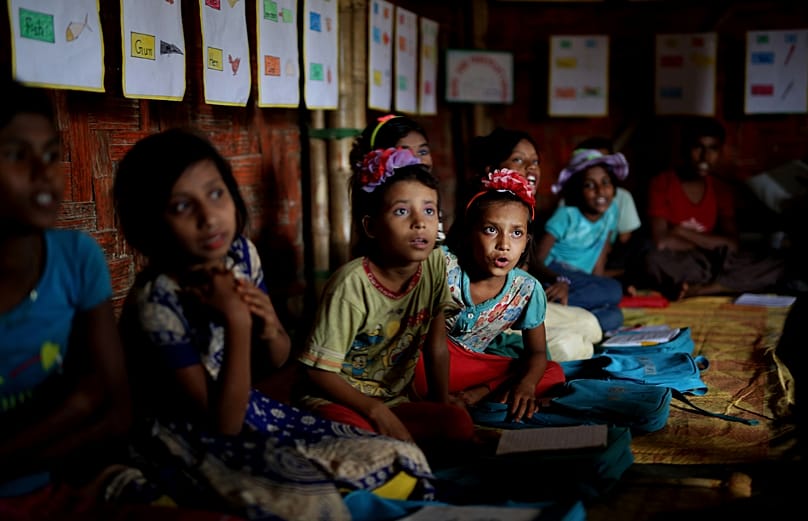
The laughter that once filled Noor Zia's classroom has been replaced by tears. Nearly every day, she says, her former students stop by to see if the school has reopened, only to break down when told it has not.
Zia often finds herself in tears, too. Before the aid cuts, she was the head teacher of 21 early learning centres that served 630 children aged between three and five.
But the closures left her without a job, making it even harder for her to keep her family alive on the camp’s meagre rations.
"My heart is still crying, because my family depends on this job," she says, sitting in the empty classroom, where the wall behind her is adorned with a drawing of the Myanmar flag, a country most of her students, born in the camps, have never seen.
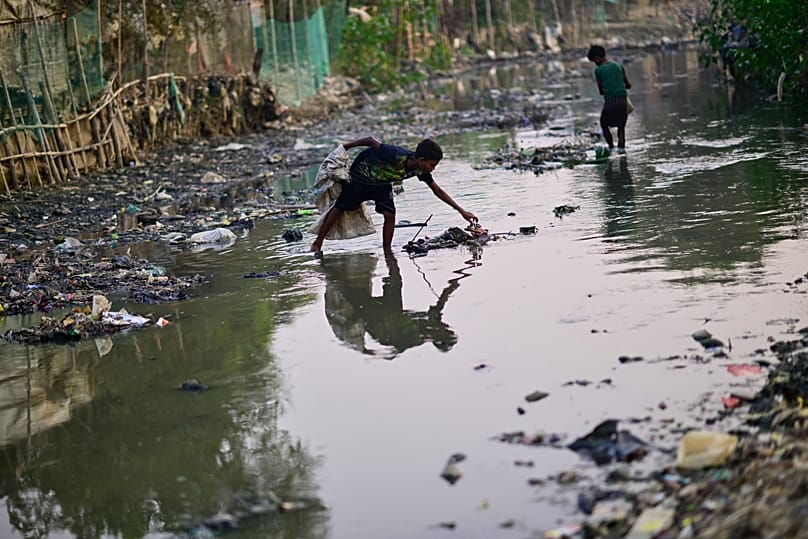
The funding cuts' pain goes beyond the school closures. Skills development programs that kept thousands of children occupied were also halted. Healthcare, nutrition and sanitation services have been reduced. In camps crawling with scabies and other diseases, the results of the reductions are clear on the children’s scrawny bodies.
Bangladesh has barred the Rohingya from leaving the camps to find work, so they are reliant upon humanitarian aid to survive. But the UN's World Food Programme, which had counted the US as its largest donor, says it only has enough funds to continue providing food rations until March.
The prospect of a ration cut has terrified families. With no country offering the Rohingya large-scale resettlement, many have opted to make a run for it, with devastating results. Nearly a third of the 1,340 Rohingya who have fled Bangladesh by boat this year have died or gone missing en route, according to the UN High Commissioner for Refugees.
Noor Kaida, a 17-year-old whose dreams of becoming a doctor were dashed when she was married off after her school shut, says she has lost two young relatives to traffickers.
Shattered by the school closures, the 13- and 16-year-old girls believed traffickers who promised them a better life in Malaysia, Kaida says. Other passengers on the girls’ boats later told Kaida’s family both girls were killed; one by drowning, and the other at the hands of a trafficker.
"If the school wasn't closed, they wouldn't have had to take these risks," Kaida says. "Because of the funding cuts and the school closures, thousands of girls were scattered in different places and their lives have been ruined."