





























The EU's primary option for backing Ukraine is fiercely resisted by Belgium, the prime custodian of the Russian assets needed to fund it, while the back-up option of joint debt requires unanimity – and Hungary has already said no.
The 27 leaders of the European Union are gathering in Brussels on Thursday to make a decision that could redefine the continent's security architecture: how to raise at least €90 billion to meet Ukraine's financial and military needs for 2026 and 2027.
With the United States pushing for a fast deal between Ukraine and Russia, diplomats and officials are framing today's summit as a make-or-break moment for Europeans to maximise their collective leverage and prove they still have skin in the game.
"We have to find a solution today," said Ursula von der Leyen. "We won't leave the European Council without a solution for the funding for Ukraine for the next two years."
There are two main options on the table to reach the €90 billion figure.
The first is a groundbreaking proposal to channel the immobilised assets of the Russian Central Bank into a zero-interest reparations loan to Ukraine, which the country would only be asked to repay after Moscow compensates for the damage done by its invasion.
The second is common borrowing on the financial markets, as the Commission did on behalf of all member states during the COVID-19 pandemic.
The reparations loan is fiercely resisted by Belgium, the prime custodian of the Russian assets. Belgian Prime Minister Bart De Wever said he was open to "compromises" but insisted there could be no "flexibility" regarding his country's financial stability.
"I won't give up," De Wever said on Thursday morning.
Follow our live blog for updates.

 ${title}
Breaking down Belgium's three demands for the reparations loan
Belgium, the prime custodian of the immobilised Russian assets, is still resisting the reparations loan for Ukraine and prefers the option of joint debt. But that doesn't mean it is completely opposed to the proposal.
For the past few weeks, Belgian Prime Minister Bart De Wever has insisted on three conditions that must be met in return for his agreement. These are:
- Full mutualisation of risks: Belgium is demanding open-ended guarantees to protect itself against any eventual scenario, like a successful lawsuit that leads to multi-billion-euro damages. The proposal by the European Commission has capped the guarantees at €210 billion, the total value of Russian assets on EU soil. In recent days, ambassadors have increased the figure, but they have not yet agreed to provide unlimited guarantees, which might prove impossible for some capitals.
- Liquidity safeguards: Belgium is demanding that Euroclear, the Brussels-based institution that holds the bulk of the Russian assets, be able to honour its legal claim with the Russian Central Bank at all times and with absolute immediacy. The Commission is willing to lend money to member states that can't meet their pledged guarantees, therefore ensuring that Euroclear has liquidity. Additionally, the assets have been immobilised indefinitely to avoid an unexpected release.
- Burden sharing: Belgium wants every member state that holds Russian sovereign assets to participate in the reparations loan. These are: Germany, Sweden, Cyprus and France. In particular, France has about €18 billion of Russian Central Bank assets in private banks. The Commission says all sovereign assets on EU soil will be channelled into the reparations loan, but officials note the contractual obligations between the banks and Russia require further study. Belgium also wants other G7 partners (the UK, Canada and Japan) to mimic the reparations loan in their own jurisdictions.
De Wever is set to repeat those demands during today's summit. Will he obtain the necessary assurances from other leaders to agree?
Merz, De Wever and von der Leyen held 11th-hour talks last night
German Chancellor Friedrich Merz, Belgian Prime Minister Bart De Wever and European Commission President Ursula von der Leyen held another trilateral meeting yesterday evening in Brussels to discuss the reparations loan proposal, a person familiar with the talks told Euronews.
The three left a dinner with leaders from the Western Balkans early to discuss the plans in private.
This is the second time they have held such a trilateral meeting after Merz flew to Brussels on 5 December in a bid to allay Belgium's concerns over burden-sharing.
The German chancellor is among the most vocal proponents of the reparations loan to finance Ukraine's military and macro-financial needs for the coming two years.
Metsola: Joint declaration on ten legislative priorities to be signed by EU institutions
The European Commission, Parliament, and member states are set to sign a joint declaration on the ten legislative proposals to be prioritised for the time being, European Parliament President Roberta Metsola told journalists during a press conference on Thursday.
EU Parliament set to vote on reparations loan for Ukraine in January If deal reached, Metsola says
Reparations loan can be approved in the European Parliament in January if EU leaders strike a deal during today's summit, EU Parliament President Roberta Metsola told journalists on the margins of today's European Council.
"A vote can be set up during the next plenary session if leaders make a deal," Metsola said during her traditional press conference after addressing EU leaders at the Council.
EU leaders are racing against time to agree on a common plan to fund Ukraine's efforts against Russia for 2026 and 2027.
Two options are currently on the table: The first is to use frozen immobilized assets to create a zero-interest loan for Ukraine, which Kyiv would repay only if Russia later pays war reparations.
The second option would entail the EU jointly raising funds by borrowing from financial markets, following a model similar to the one used during the COVID-19 pandemic.
Zelenskyy pressed leaders to back reparations loan
Ukrainian President Volodymyr Zelenskyy made the case for EU leaders to back a reparations loan during his address, Euronews has learnt.
EU leaders are however not scheduled to discuss the issue of financing for Ukraine until later this afternoon.
The discussions have now moved to enlargement.
'Peace is not cheap,' Costa says as Zelenskyy joins talks
Peace is not cheap. It is priceless.
— António Costa (@eucopresident) December 18, 2025
Since the start of Russia’s aggression, the people of Ukraine have been paying the ultimate price for their freedom. Europe remains resolute in supporting them for as long as it takes.
Dear President @ZelenskyyUa, welcome back to the #EUCO. pic.twitter.com/mPA5x7pxgB
Vote on Mercosur should be delayed, Macron says
Macron also reporters that he is calling for a vote on the trade deal with the Mercosur bloc to be delayed, arguing that the agreement is not fully developed.
"It is about Europe's consistency, and it is about a Europe that protects its agriculture and its producers," he said. "We cannot accept sacrificing the consistency of our agriculture, our food, and the food security of our fellow citizens for agreements that have not yet been finalised. We have been very clear from the outset. We are asking for what is known as a safeguard clause."
Co-legislators on Wednesday struck a deal to implement even stronger safeguards hoping it would appease Paris, and increasingly Rome, but it still needs to be endorsed by member states.
"So it is not ready yet. But we are moving in the right direction," Macron said.
The French leader said he has had "a lot of talks" in recent days with Italian Prime Minister Giorgia Meloni, who now holds the power to either pass the deal or vote with a blocking minority to delay it.
"She also considers that things are not ready to be voted on today," Macron said.
Meloni, who addressed the Italian Senate on Wednesday, said of the deal that "as it stands, it is premature".
Supporters of the deal, including the Commission, Germany and Spain, argue that a delay risks killing the deal altogether. They claim the agreement would benefit Europe economically and politically as it seeks to diversify global ties after US President Donald Trump hammered the world with tariffs.
Brazilian President Lula da Silva threatened to pull out of the Mercosur agreement altogether if it is not approved before the end of the year. The trade bloc also includes Paraguay, Uruguay and Argentina, but Brazil is seen as the key player.
Zelenskyy now addressing EU leaders
Ukrainian President Volodymyr Zelenskyy, who is attending the summit in person but skipped the doorstep area, is now addressing his EU counterparts, an official has said.
This means the exchange with European Parliament President Roberta Metsola is over, and she should be answering journalists' questions shortly.
Austria’s Chancellor: ‘Illegal migration needs to stop’
Austria’s Chancellor Christian Stocker welcomed the latest “positive” EU developments on migration policy, noting that the bloc is “concerned” and has “recognised” that action is needed to tackle illegal migration.
"I have always had a clear position about the fact that illegal migration needs to be stopped,” Stocker told reporters ahead of the European Council summit.
EU leaders will take stock of the latest decision proposed by the European Commission that makes it easier to deport asylum seekers and irregular migrants in the EU.
Austria’s Chancellor shows solidarity with Belgium: 'We must take their concerns seriously'
Austrian Chancellor Christian Stocker stated that the European Commission’s proposal on Russia’s immobilised assets must have a clear legal basis to prevent any potential retaliation from Moscow.
Stocker expressed solidarity with Belgium’s delicate position, as Brussels holds most of the Russian immobilised assets at the Euroclear bank.
"We must take these (Belgium’s) concerns seriously,” Stocker told reporters on the sidelines of the European Council.
“Such a decision should not be made against Belgium. On the other hand, we will also have to solve the question of how we deal with frozen assets and our sanctioned assets one-sidedly," Stocker added.
Portugal’s Prime Minister backs 'several solutions' for Ukraine and calls on decent financing for agriculture
Portuguese Prime Minister Luís Montenegro told reporters today's Council summit will be "hard" and "intense", but that "it is possible to reach an understanding about the various subjects that are on the table”.
Portugal backs the use of immobilised Russian assets, but Montenegro said that "other solutions" or even "the combination of more than one solution" could also be used to keep Ukraine afloat.
Montenegro also flagged discussions on the EU’s multi-annual budget for 2028-2034 and said that financial mechanisms for cohesion are a must. He said that financing for agriculture and the outmost regions shouldn’t be overlooked because of the greater emphasis on security and defence.
On Mercosur, a trade deal that would affect 700 million consumers, Montenegro said it would be “unforgivable” not to strike a deal at today's EU summit.
A decision on Mercosur remains shrouded in uncertainty, or even indecision, Montenegro said.
'It’s regretful to see Georgia walking away from the EU,' says Lithuanian President
Lithuanian President Gitanas Nausėda said he was “a little upset” by recent developments in Georgia, which he believes signal a move away from the close relationship between Vilnius and Tbilisi.
“Although Georgia is far away from Lithuania, we have very close ties, emotional ties, historic, traditional ties, and it's regretful to see that Georgia is not coming closer,” Nausėda told reporters.
He regretted that Georgia is "distancing itself from the European Union” and from the bloc's rule of law.
"I think the situation will be very complicated, and it would be disappointing for Georgian people, who are expecting that the country will make bold progress towards the European Union,” Nausėda added.
Every member state must be 'heard and respected' on reparations loan, Macron says
French President Emmanuel Macron told reporters that a solution on financing Ukraine's needs for the coming two years "must" be found given that member states share the same objective of helping Kyiv sustain its war effort.
"We must find the right solution calmly and with mutual respect. The most important thing is that we all share the same objective: to help Ukraine finance its war effort and resist," he said upon arriving at the summit.
"We must not allow ourselves to be divided over technical details. Everyone must be respected and heard. We will therefore hold discussions with our Belgian colleague and with all our colleagues. I want this to be a collective, peaceful effort, but I am confident that we will find a solution."
Make-or-break EU summit begins
The EU summit has formally begun. All eyes are on Bart De Wever, the Belgian prime minister, who continues to resist the reparations loan for Ukraine, backed by a majority in the room.
"I won't give up," De Wever said on Thursday morning.
Stay tuned for updates throughout the day.
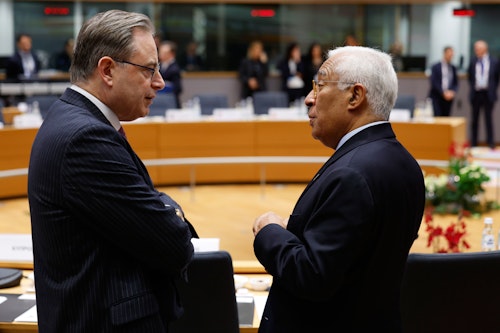
Associated Press.
Slovenia’s PM: ‘We need to have final talks with Russia'
Slovenian Prime Minister Robert Golob said the European Union must engage in “final talks with Russia” if it wants to achieve peace on the continent.
"The fact that we are talking to each other is pretty nice and full of media slogans, but a strong step against peace is only possible today,” Golob told reporters on the sidelines of the European Council.
Golob stressed that the issue goes beyond money, noting that “there are alternatives,” including contributions from each member state. “The frozen assets probably are not enough,” Golob said.
EU leaders discuss migration issues over a breakfast ahead of the summit
Fifteen EU leaders have held a sixth informal coordination meeting on “innovative solutions” to address migration, co-chaired by the prime ministers of Italy, Denmark and the Netherlands, a diplomatic source said.
Other EU leaders took part in the talks, including from Austria, Bulgaria, Cyprus, Croatia, Germany, Greece, Poland, Czech Republic, Latvia, Malta, Hungary and Sweden.
European Commission President Ursula von der Leyen also attended the meeting.
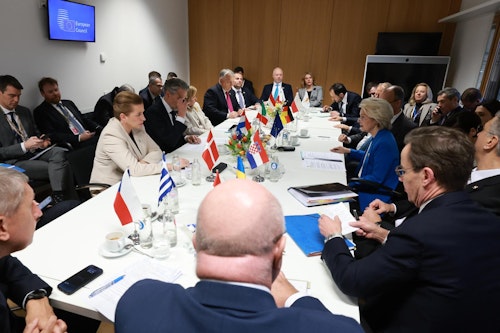
Credits photo: European Union
Ireland’s Taoiseach backs use of immobilised assets as a matter of sovereignty
"We're very much in favour of the utilisation of the immobilised assets or the raising of a clapper alone against the assets to finance Ukraine over the next two years,” Irish Taoiseach Micheál Martin told reporters on the sidelines of the European Council summit.
Ireland argues that there needs to be deterrence against countries like Russia that violate the UN Charter, undermine the sovereignty of other nations, and then destroy those countries, their civil infrastructure, and their energy infrastructure.
Reparations loan would prove Europe 'means business', Estonia PM says
Estonian Prime Minister Kristen Michal told reporters that the reparations loan is needed to uphold the principle that "the aggressor must pay" and show Ukraine and the rest of the world that "Europe is up to (the) task".
"If we can make a decision with the frozen assets, that also has the indication to our partners that we mean business," he added.
If leaders can't agree on a solution today, "then we have to continue tomorrow" and if they fail then, "then day after that, because I have a calendar free for that," Michal said. "But jokes aside, I would say that for Europe this is like make it or break it moment, because everybody's looking at us with the frozen assets."
Leaders are also set to discuss the proposal for the bloc's next multi-annual financial framework, which will cover the 2028-2034 period. Earlier this year, the European Commission put forward a nearly €2 trillion proposal.
Michal said the "first proposal is quite good", notably because it includes more money for defence.
"What needs more attention probably is the eastern border because (the) eastern region has been affected by Russian warfare," he argued.
Michal and the leaders of other so-called frontline states attended the first-of-its-kind Eastern Flank Summit on Tuesday where they called for the "prioritisation" of EU funds towards the Eastern Flank Watch flagship project in the Commission's Defence Readiness 2030 Roadmap.
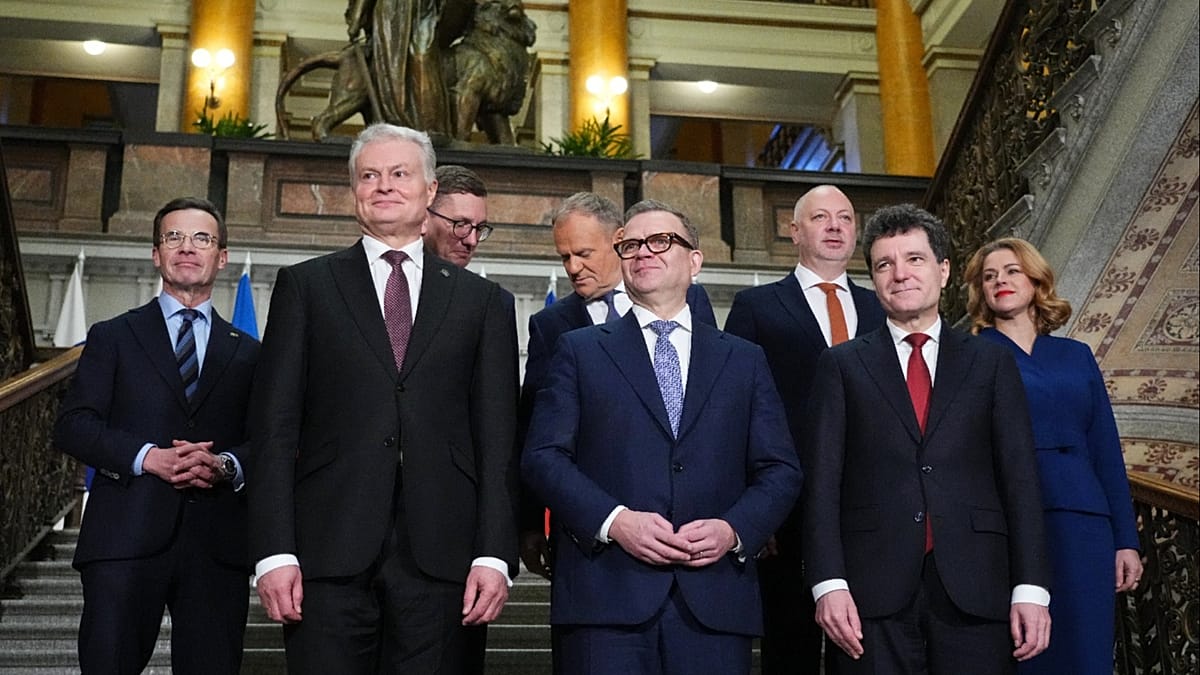
Eastern flank must be prioritised for EU defence funding, leaders say
The Eastern Flank Watch is one of four flagship projects pitched by the European Commission to boost Europe’s defence, but EU leaders have yet to endorse the p…
Bart De Wever says he won't give up but is open to compromises
Belgian Prime Minister Bart De Wever has skipped arrivals because he spoke earlier today at the Belgian parliament. Belgium, the prime custodian of the immobilised Russian assets, has vehemently opposed the reparations loan for Ukraine and has asked for sweeping guarantees in exchange.
"I won't give up," he said this morning, according to Belgian media. "I haven't seen any text yet that would persuade me to change Belgium's position. I hope to see it today, but so far, it hasn't arrived."
De Wever noted he was open to making "compromises" with the other leaders but not when it comes to "the financial security of Europe and Belgium".
If the reparations loan is eventually approved, that will be a "shame", he said. "But if it's completely mutualised and sealed off for our country, then we'll jump into the abyss along with all the Europeans and hope the parachute will hold us," he added.
De Wever insisted his preference is to issue fresh debt at the EU level, possibly by invoking Article 122, which only requires a qualified majority and is designed for economic emergencies. But the European Commission believes using Article 122 to issue common debt and bypass unanimity could be illegal.
Netherlands to guarantee €14 billion for Ukraine's reparations loan
The Netherlands will guarantee up to €14 billion if EU leaders agree to use frozen Russian assets for a reparations loan, Dutch Prime Minister Dick Schoof told reporters upon arriving at the summit on Thursday.
"We have to share the risks with each other. I think that is a fair objection on the part of the Belgians," he said, adding: "I think it's important that we figure it out today".
The proposal on the table would see member states take on guarantees proportionally. Germany, the EU's largest economy, would likely guarantee up to €52 billion.
On the Mercosur, which is not officially on the agenda but is likely to occupy most of the discussion leaders will have on competitiveness, Schoof said the trade agreement as it stands is "decent".
He added that farmers' concerns over the treaty are "important" but that "a number of additional measures have been taken" to assuage them.
Latvian PM Silina wants to show Russia a ‘red flag’ with a deal on frozen assets
Latvian Prime Minister Evika Siliņa told reporters that the best way to support Ukraine would be to reach an agreement on Russia’s immobilised assets, adding that such a move would allow Europe to send a strong message to Moscow.
“The first and the best option is to use frozen assets, to show a strategic move," Siliņa said. "Europe is able to decide and to show a red flag to Russia.”
She said that many of the legal aspects of this approach have already been resolved and would not affect Member States’ debt levels. While acknowledging Belgium’s legal concerns, the Latvian prime minister stressed that a political decision is now required.
“Belgium is surely in a very sensitive situation, but it is also a question of political will, not just legal aspects," she said. But we are politicians, we are the ones who are making rules as well so we have to figure out how we decide on that, not just for Ukraine, but for Europe as well.“
Silina said another option to support Ukraine would be joint borrowing. But to agree on this, unanimity is needed, and Hungary is not supporting the idea.
Reparations loan won't be approved without Belgium, says Costa
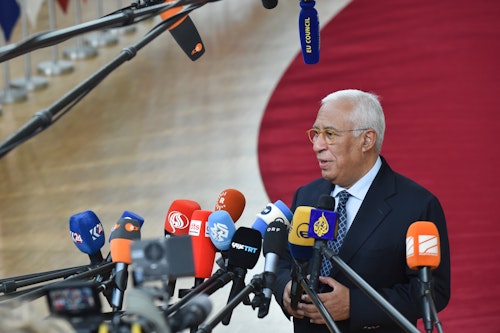
António Costa, the president of the European Council and chair of today's crucial summit, has underlined that no decision on the reparations loan shall be taken without Belgian consent. Belgium holds €185 billion in immobilised Russian assets and fears being liable for the unprecedented scheme.
"I want to commend Belgium and Prime Minister Bart De Wever (for raising) critical legal and technical issues in a very constructive way," Costa said upon arrival.
"We will never leave this Council without a final decision (for Ukraine), and we will never approve the solution that does not ensure all the security for Belgium and the Belgians."
Luxembourg PM: joint EU borrowing is the 'easier' option to fund Ukraine, but strong majority is needed
Financing Ukraine through joint EU borrowing on the financial markets is the “easier” option, but it would require a strong majority—or even unanimity—Luxembourg Prime Minister Luc Frieden told journalists on Thursday ahead of the EU leaders’ summit in Brussels.
“It is easier because it does not jeopardise financial stability of the Eurozone, and it does not entails complex technical discussions," Frieden said.
The Prime Minister said the use of immobilised assets, which is the other option on the table, is more complex. "It was never done before and it raises complex legal issues."
There are €210 billion of Russian sovereign assets in Europe, of which €185 billion are held in Euroclear, a Brussels-based depository. But Belgium has firmly resisted the initiative, fearing it would face Russia's retaliation and multi-billion-euro losses at court. The country has demanded that other member states provide strong guarantees.
“We have to find a group of countries which share the risks” if Russia launches a court case to claim the assets at the end of the war or once sanctions are lifted, the Luxembourg PM said.
The asset's option would require a qualified majority to be used among the 27 member states.
European Parliament ready to 'move urgently' on Ukraine financing: Metsola
European Parliament President Roberta Metsola told reporters on Thursday morning as she arrived at the summit that "the most important thing we can do today is to stand with all our full unity behind President Zelenskyy and Ukraine."
"That means we need to resolve the financing issue here. The European Parliament is willing to cooperate on all fronts. We are ready to go and move urgently if a decision is taken on the reparations loan."
"But make no mistake, we are in a no-choice scenario if we want to help Ukraine, if we want to reassure that Europe's security is guaranteed. Then we need to find a solution today on the financing of Ukraine," Metsola added.
Bart De Wever, the protagonist of the summit, skips arrivals
Belgian Prime Minister Bart De Wever will not take part in the arrival doorsteps at today’s crucial EU summit, as he addressed the Belgian parliament earlier today.
This is a big disappointment for reporters: De Wever is the chief opponent of the reparations loan for Ukraine and is always generous in his remarks to the media. In October, his intervention in the morning set the tone for the remainder of the day.
Orbán: the issue of frozen assets is 'dead'
Hungarian Prime Minister Viktor Orbán said there is enough support in the European Council to block the idea of using Russia’s frozen assets to support Ukraine.
“I think the issue of frozen assets is dead. Last night, I saw that there are enough opposing countries here to form a blocking minority. So I think this is a dead issue.”
Orbán added that leaders should re-examine the issue of financing Ukraine. He will refuse to accept a joint borrowing for Ukraine even if Hungary gets an opt-out from the financial guarantees.
“For Hungary, the path of financing Ukraine from a joint loan is absolutely not possible, but beyond the legal limits, I would not agree with it. I think that we should not finance war, but peace. What I am trying to achieve here today is that we take steps towards peace, not war. “
Orbán reiterated his previous statement that using Russia’s sovereign assets would equal a declaration of war.
“The plan is to take the seized property of one of the parties at war and give it to the other side," he said. "This is nothing more than a declaration of war.”
Orbán also said he supported farmers protesting in Brussels. The Mercosur free trade agreement with Latin-American countries “would kill farmers," he added. 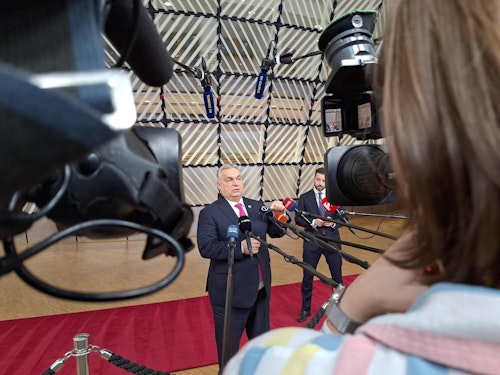
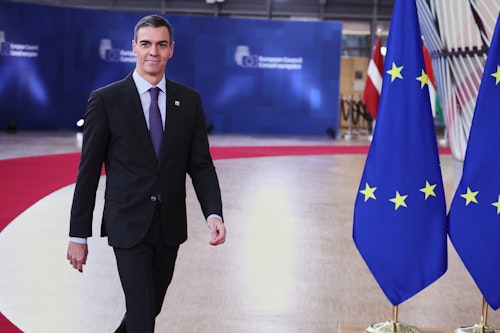
Pedro Sánchez calls for coherence on Ukraine and Gaza
Pedro Sánchez has urged the EU to be "coherent" in their response to Ukraine and Gaza, warning about "double standards" accusations from other countries.
Upon arrival, he outlined three key principles: unity, coherence and action. "We have to make one decision, be it one or the other, about the support needed for the Ukrainian people at this critical time," Sánchez said.
The Spanish leader also urged the EU to sign the free trade deal with Mercosur, which is close to falling apart after Italy sided with France and requested a delay in the vote.
"This agreement is one of many for Europe to gain geo-political and geo-economic weight," he said. "Europe must be open to this type of commercial agreement."
"It would be very frustrating if Europe failed to reach a deal with Mercosur," he added.
Associated Press.
Swedish PM: we can find 'technical solutions' to help Belgium
Swedish Prime Minister Ulf Kristersson told journalists on Thursday that finding an agreement on using Russian immobilised assets to finance Ukraine is the better option on the table.
EU leaders are meeting in Brussels on Thursday and Friday to decide how to raise at least €90 billion to meet Ukraine's financial and military needs for 2026 and 2027.
Two options are currently on the table: The first is to use frozen Russian Central Bank assets to create a zero-interest loan for Ukraine, which Kyiv would repay only if Russia later pays war reparations.
The second option would entail the EU collectively raising funds by borrowing on the financial markets, following a model similar to that adopted during the COVID-19 pandemic.
Kristersson said he wasn’t hopeful about the second option as it requires unanimity to be approved. However, he urged the EU to find ways to satisfy Belgium, which holds the majority of the assets.
"Everyone understands that the country that has 90% of the assets must be involved in such a solution. That is why I believe and hope that we can find technical solutions to issues that Belgium is still raising", Kristersson said.
"We’re not there yet, so I won’t be announcing any victory on this issue until much later this evening", the Prime Minister added.
'We have to be tough', says Lithuania’s President on Russian immobilised assets
Lithuania’s President Gitanas Nauseda reiterated the country’s continued support to Ukraine, saying now is the moment for the European Union “to be tough”. “This is not the time to hesitate, we have to touch untouchables like Gazprom and Lukoil because only those bold decisions will make an impact in Russia’s economy,” Nauseda told reporters ahead of today’s European council summit.
He said the decision will have a significant impact on the Russian economy, which is already in bad shape.
The Lithuanian President said the country welcomed the European Commission's proposal for a risk-sharing mechanism to support Belgium, which hosts the bank holding the Russian immobilised assets, Euroclear.
"Lithuania understands the situation of Belgium and some other member states affected. We are ready to participate in risk-sharing mechanisms that countries will step in, so that they should not be punished for their actions,” Nauseda added.
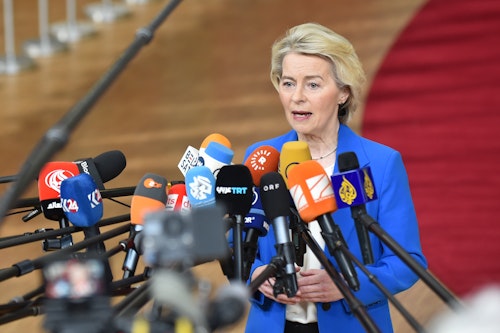
EU-Mercosur trade deal is of 'enormous importance', says von der Leyen
Let's go back to Ursula von der Leyen for a moment. Upon her arrival, the president of the European Commission also spoke about the EU-Mercosur free trade agreement, which is close to collapsing after Italian Prime Minister Giorgia Meloni sided with France to request a delay in the vote. If the vote doesn't happen this week, von der Leyen won't be able to fly to Brazil to sign the text.
"We have to get rid of our over-dependencies. This is only possible through a network of free-trade agreements," von der Leyen told reporters. "And therefore, Mercosur plays a central role in our trade agreements. It is potentially a market of 700 million consumers, like-minded countries that want free trade together."
"It is of enormous importance that we get the greenlight for Mercosur and that we can complete the signature for Mercosur," she added.
'Large support' for reparations loan in Council, Costa says
European Council President António Costa said upon arriving at the summit that leaders will not leave "without a final decision to ensure the financial needs for Ukraine for 2026, 2027".
He added that there is "large support" in the Council for the reparations loan.
"To put in motion this decision is crucial to increase the pressure on Russia", he also said, and put Ukraine in the "best conditions" for peace talks.
Belgium won't be outvoted on reparations loan, Kaja Kallas promises
High Representative Kaja Kallas has promised that Belgium, the prime custodian of the Russian assets, won't be outvoted on the reparations loan.
"Many member states have said that Belgian consent is very important, so I don't think we are going to move without Belgium being comfortable," Kallas said upon arrival at the summit.
Kallas argued that if the reparations loan becomes law, it will remove the pressure from Belgium because it will become a European-wide solution and the EU, as a whole, will be responsible for it.
"It is the most viable option right now on the table; we need to work with that, as we have tried other things before," Kallas said. "I really hope we get this over the finish line."
Asked if the reparations loan could imperil the US-led peace talks, the High Representative said that the "peace deal is jeopardised by Russia, which hasn't accepted anything". She then urged leaders to find a solution this week, warning that Moscow is "banking on us to fail".
Support for Ukraine and an agreement on Mercosur are today’s priorities, says Chancellor Merz
German Chancellor Friedrich Merz maintained his position on the use of frozen Russian assets and said EU leaders need to decide “between today and tomorrow” whether to approve the Mercosur trade deal with the EU and South American countries, including Brazil, Argentina, and Paraguay.
On the frozen Russian assets, Merz said he “doesn’t see any other option” and that it’s possible to “come to a conclusion” during the summit.
"I understand the concerns that some member states have, especially with the Belgian government, but I hope that we will be able to clear them up together and that we also can take a path together from this European Union, to show a sign of strength and determination towards Russia,” Merz told reporters.
On Mercosur, a trade deal that has been in the making for the past 25 years, the EU is facing resistance from France and Italy, which could block it.
“It is time to make a decision. If the European Union wants to remain credible in the trade policy of the world, then decisions must be made now,” Merz said.
"And the decision can only be that Europe agrees and that the Commission President and the Council President tomorrow travel to South America and sign this agreement,” he added, saying he's "confident" the agreement will succeed.
'Our decision to make,' Tusk said on reparation loan
In a very short doorstep statement upon arriving at the summit, Polish Prime Minister Donald Tusk told reporters that the reparations loan to Ukraine will be resolved “either today or tomorrow".
“This is our decision to make,” the former Council President said.
The Polish government strongly supports the loan for Ukraine, which is a European proposal to use frozen Russian assets to finance Ukraine's war effort, and it will be the hottest topic on the table when EU leaders meet today.
Now we have a simple choice: either money today, or blood tomorrow. I’m not talking about Ukraine only, I’m talking about Europe. This is our decision to make. And only ours. All European leaders must finally rise to the challenge.
— Donald Tusk (@donaldtusk) December 18, 2025
Ukraine needs the means to survive this war, Luxembourg Prime Minister tells Euronews
“We need to give Ukraine the means to survive this war, borders cannot be changed by force," Luxembourg Prime Minister Luc Frieden told Euronews’ flagship programme Europe Today.
European leaders are gathering today and tomorrow in Brussels to discuss the most urgent issues to solve before the end of the year, including how to finance Ukraine from the beginning of 2026.
There are two main ways being considered to raise the EU’s €90 billion share to provide Ukraine with financing for the next two years.
The first would be to use frozen Russian Central Bank assets to create a zero-interest loan for Ukraine, which Kyiv would only repay if Russia later pays war reparations. The second would involve the EU jointly borrowing money on financial markets, similar to the approach used during the COVID-19 pandemic.
“We will find a solution, we have two options on the table," Frieden said. The use of frozen assets, the prime minister said, is "complex but we can find a way to make it work”.
There are €210 billion of Russian sovereign assets in the EU, of which €185 billion are held in Euroclear, a Brussels-based depository.
Belgium has demanded other member states provide strong guarantees.
“We have to find a group of countries which share the risks” in the scenario in which Russia launches a court case to claim the assets at the end of the war or once sanctions are lifted.
“We need to be united because the US might not be there with us in the future," the Prime Minister pointed out, referring to Washington's gradual disengagement in supporting Ukraine in its war against Russia.
Mercosur: 'We need to stick with what we agreed with other countries,' Luxembourg PM tells Euronews
The European Union should honour the commitments it has made to its Mercosur partners, Luxembourg Prime Minister Luc Frieden told Euronews’ flagship programme Europe Today.
Addressing farmers’ concerns over the trade deal, the prime minister said these issues “can be solved domestically,” stressing the importance of ensuring the agreement does not fail, amid several EU countries expressing reservations over the deal.
'We won't leave without a solution for Ukraine,' says Ursula von der Leyen
Ursula von der Leyen has arrived at the EU summit with a clear-cut message: "We have to find a solution today," she said. "We won't leave the European Council without a solution for the funding for Ukraine for the next two years."
The president of the European Commission has proposed two options: the reparations loans, based on the immobilised Russian assets, and joint debt, backed by the EU budget. Though she has previously advocated in favour of the reparations loan, today she made no special distinction, saying simply that "the most important part" is to raise €90 billion to meet Ukraine's needs for 2026 and 2027.
Von der Leyen said that it is "absolutely understandable" that Belgium, the prime custodian of the Russian assets, has concerns about the reparations loan. "I totally support Belgium that they insisting on having their worries and concerns accommodated, and we’re working day and night with Belgium," she said, thanking Belgian Prime Minister Bart De Wever for his "engagement".
"If we take the reparations loan, the risk has to be shared by all of us. This is a matter of solidarity and a core principle of the European Union," she said.
Reparations loan for Ukraine: Who's in favour and who's against?
As we wait for EU leaders to make their way into the summit, we want to get you up to speed on the main issue: the reparations loan.
Under the scheme, the financial institutions that hold the immobilised assets of the Russian Central Bank would transfer their cash balances to the Commission, which would then issue a zero-interest loan to Ukraine. Kyiv would be asked to repay only after Moscow ends its war and compensates for the damage its invasion has wrought. Moscow would then be able to recover its money, completing the cycle.
While the proposal has been met with public enthusiasm by some leaders, like Germany's Friedrich Merz and Denmark's Mette Frederiksen, it faces staunch opposition from others, such as Belgium's Bart De Wever and Hungary's Viktor Orbán.
We break down who's in favour and who's against.
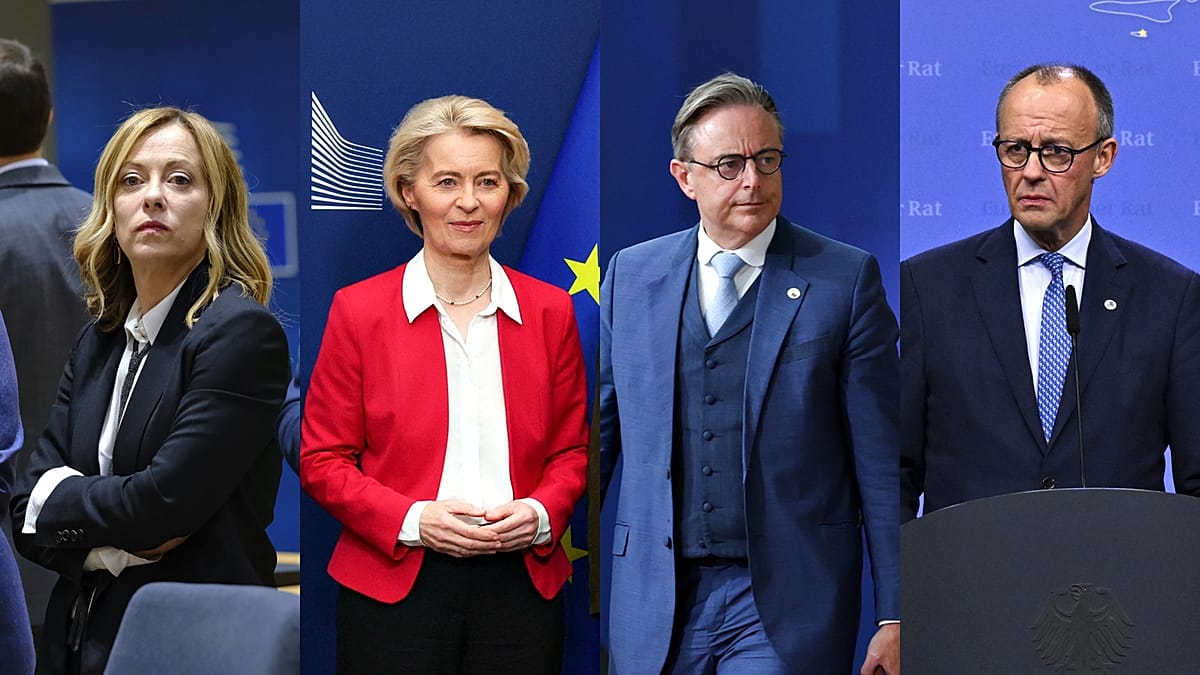
Reparations loan for Ukraine: Who’s in favour and who’s against?
The European Union’s bold attempt to issue a reparations loan to Ukraine using immobilised Russian assets has sharply divided the bloc’s key leaders. Ahead of…