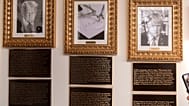
















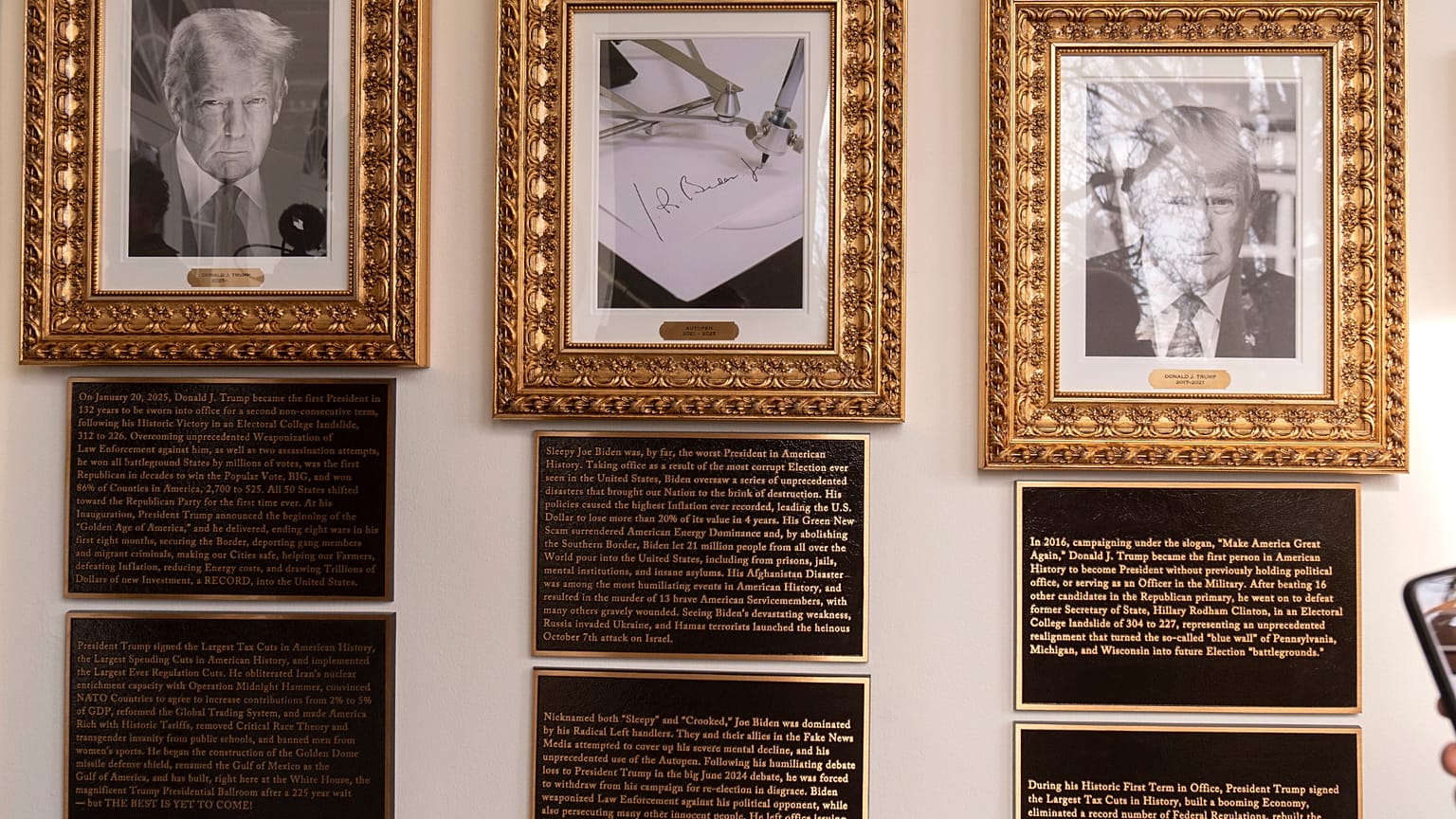













Donald Trump has added new features to his President Walk Of Fame portrait gallery of former leaders of the United States. But the decorative plaques in the West Wing of the White House have ripped up the rule book on protocol with language more akin to Trump's social media style.
Donald Trump has sparked a fresh row over protocol and what's proper with his latest decorations to the White House by adding partisan plaques to portraits of all former commanders in chief on his Presidential Walk of Fame.
In style befitting his combative and divisive language seen throughout his posts on social media, the US president doesn't pull any punches when it comes to describing his predecessors.
Joe Biden, who perhaps gets the worst of it, is presented as "Sleepy Joe" and "by far the worst President in American History" who "brought our Nation to the brink of destruction."
Trump also again referred to the unsubstantiated claim that the 2020 election was rigged, saying it was "the most corrupt election ever seen in the United States".
According to Trump, Joe Biden does not even deserve a gilded portrait. Instead of Biden's likeness, a picture of an "automatic pen", a machine used by heads of state to facilitate signatures on government documents, hangs on the wall of the White House
A plaque dedicated to President Obama describes him as "one of the most polarising political figures in American history", blaming him for the Russian annexation of the Crimean peninsula and the expansion of the Islamic State in the Middle East.
Obama is also described as a "community organizer" and notes that Trump brought down his achievements: "the terrible Iran Nuclear Deal..and "the one-side Paris Climate Accords."
There's also criticism of his fellow Republican George W. Bush with his plaque noting that he "started wars in Afghanistan and Iraq, both of which should not have happened."
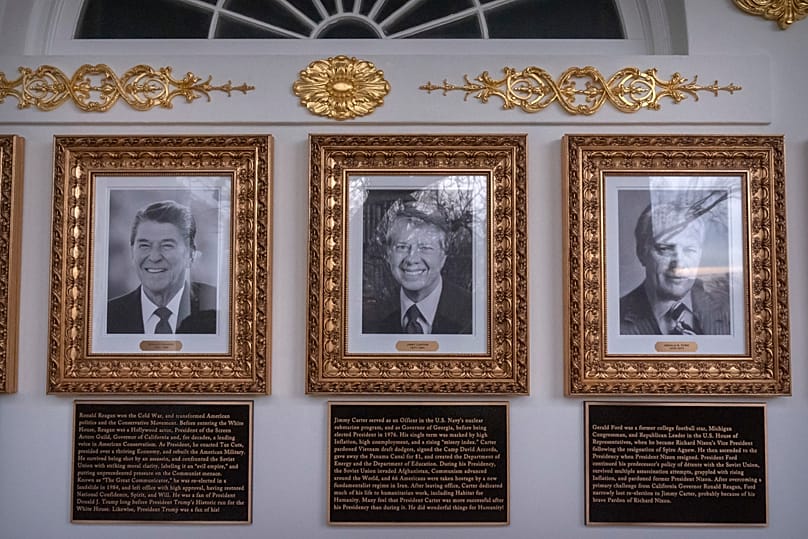
Trump himself has as many as two portraits dedicated to himself in the gallery, one for each of his terms of office. In the panels beneath his own portraits, but also beneath those of some of his predecessors, he spared no superlatives when describing his own achievements. For example, under the portrait of Ronald Reagan, one can read that the former president "was a big fan of Donald Trump before he became president".
The pardon that Gerald Ford granted to Richard Nixon after the Watergate scandal is called "courageous", the achievements of Bill Clinton's term of office are then attributed to the Republican congress and a plaque dedicated to Jimmy Carter gives a bleak assessment of his presidency, but at the same time notes that he "did great things for humanity!" after leaving office.