
































Uzbekistan and Japan discussed investment, trade and long-term cooperation during President Shavkat Mirziyoyev’s official visit to Tokyo. The agenda ranged from parliamentary dialogue to large-scale joint projects in energy, industry and technology.
Uzbekistan and Japan are strengthening one of Central Asia’s most dynamic partnerships, as Uzbek President Shavkat Mirziyoyev visited Tokyo on Friday ahead of the C5+Japan summit on Saturday.
The trip highlights growing economic ties, with Japanese investments in Uzbekistan exceeding €18 billion and the number of Japanese companies in the country rising tenfold.
It also reinforces decades of cultural and educational links, including thousands of Uzbek specialists trained in Japan and hundreds of students supported through Japanese scholarship programs.
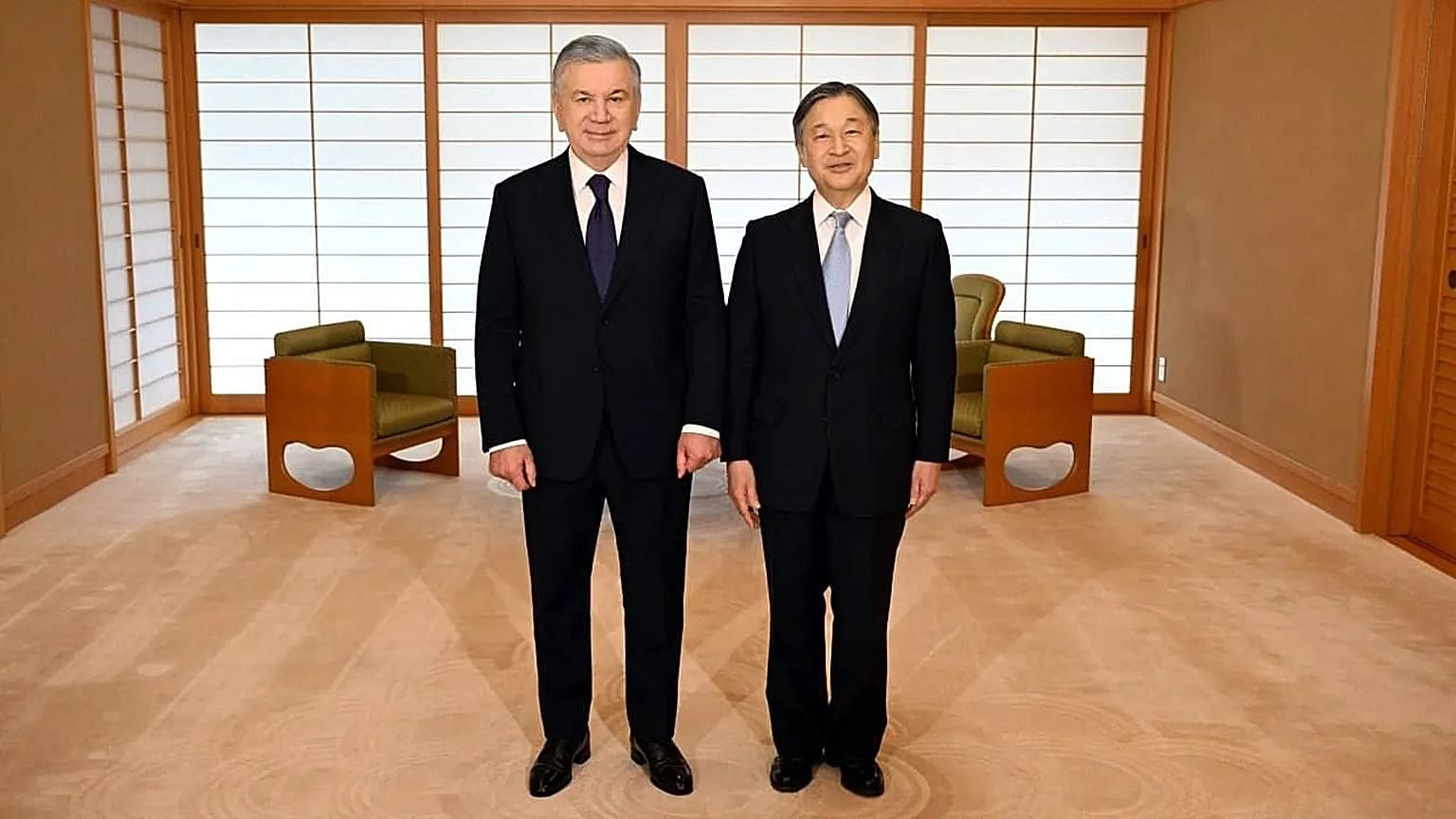
President Mirziyoyev began the visit by meeting the Emperor Naruhito at the Imperial Palace. Welcoming the Uzbek leader, the Emperor described the visit as an important step in strengthening friendly relations and the strategic partnership between the two countries.
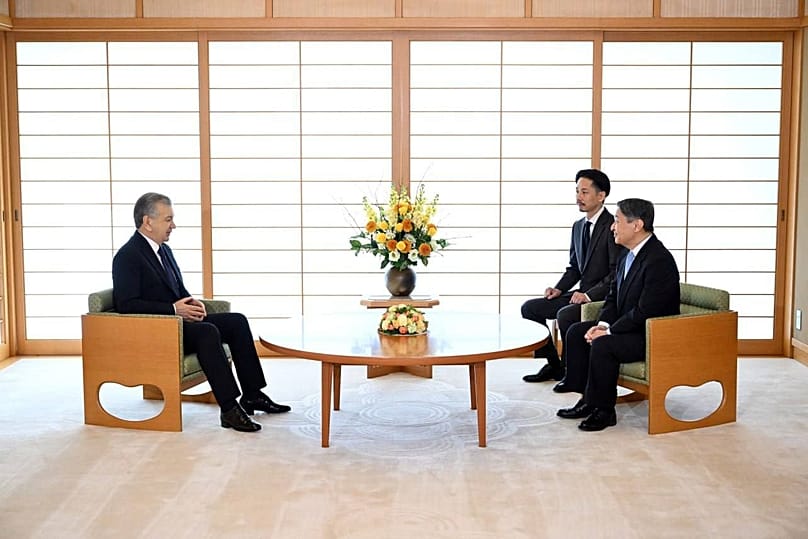
During the talks, both sides emphasised the deep cultural and personal ties between the two nations, and Mirziyoyev invited Emperor Naruhito to pay an official visit to Uzbekistan.
More than 3,000 Uzbek specialists have completed internships in Japan, while over 440 Uzbek students have received higher education through Japanese scholarship programmes. Japanese language courses are currently taught at seven universities in Uzbekistan.
Parliamentary dialogue and youth cooperation
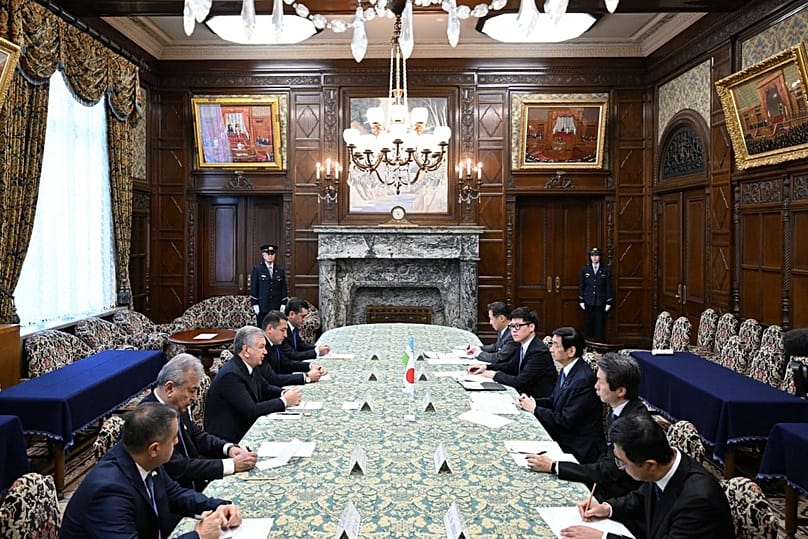
The Uzbek president also held talks with Masakazu Sekiguchi, President of Japan’s House of Councillors.
Discussions focused on the role of parliamentary diplomacy in advancing bilateral relations and supporting the implementation of agreements reached at the executive level.
Youth parliamentary initiatives, including plans for a Forum of Young Parliamentarians of Uzbekistan and Japan, as well as Japan’s participation in the Global Conference of Young Parliamentarians scheduled to take place in Samarkand in 2026, were also discussed.
Japan’s lawmakers have been increasingly involved in bilateral engagements, including participation in the Inter-Parliamentary Union's 150th-anniversary session in Tashkent earlier this year.
Interparliamentary forum planned for 2026
President Mirziyoyev also met with Taro Aso, Vice President of Japan’s Liberal Democratic Party and Chairman of the Parliamentary Friendship League with Uzbekistan.
Both sides praised the role of parliamentary “friendship groups” in advancing cooperation and agreed to hold the next Interparliamentary Forum in Uzbekistan in 2026.
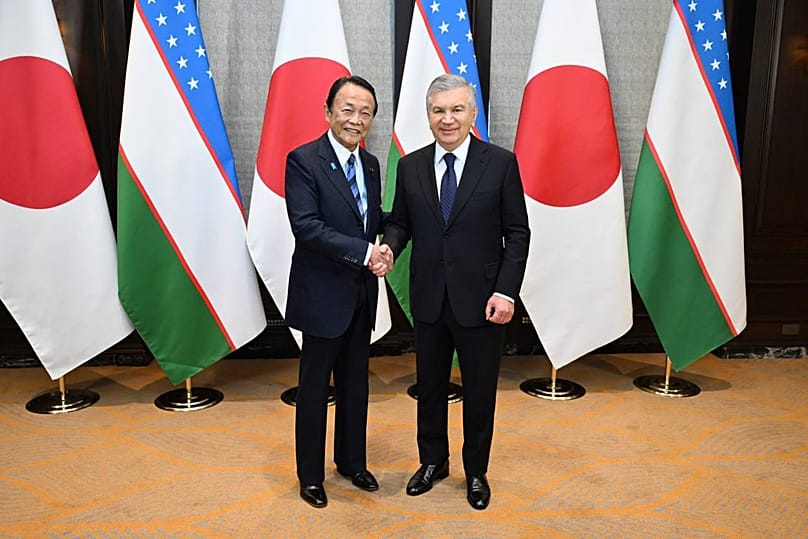
Established in 2002, the Friendship League with Uzbekistan currently brings together more than 40 Japanese political figures, lawmakers and diplomats.
Economic issues were high on the agenda during the Tokyo talks. In a meeting with Japan’s Minister of Economy, Trade and Industry Ryosei Akazawa, President Mirziyoyev noted the sharp increase in Japanese direct investment in Uzbekistan.
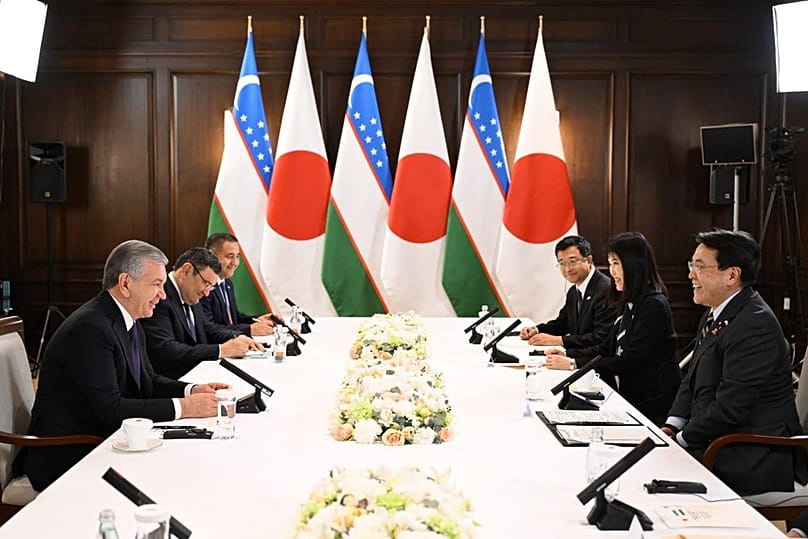
Discussions covered trade expansion, industrial cooperation and new joint projects, with a focus on renewable energy, decarbonisation, critical raw materials and advanced manufacturing.
The two sides also agreed to work towards establishing an intergovernmental commission on trade and economic cooperation at the ministerial level, as well as to develop a joint action programme with the involvement of the Japan External Trade Organisation (JETRO) and the Japan Association for Trade with Russia & NIS (ROTOBO).
Japanese businesses expand their presence in Uzbekistan
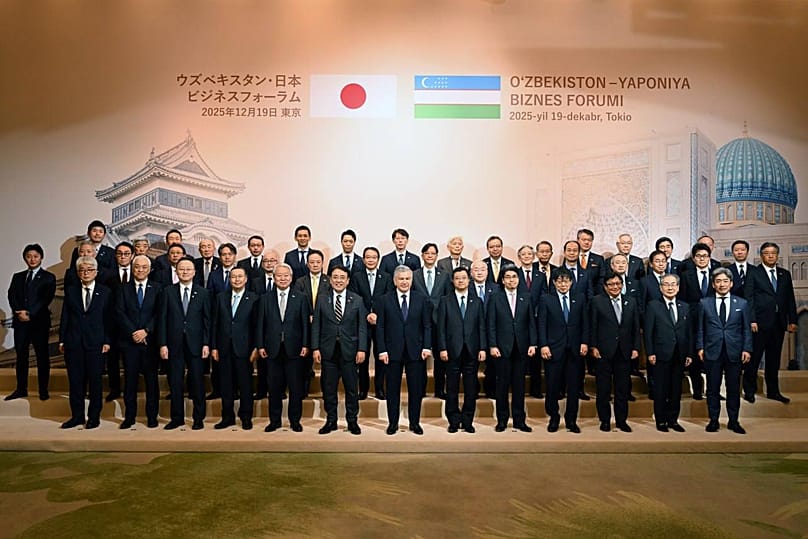
President Mirziyoyev addressed a high-level business meeting attended by executives from Japan’s leading corporations, banks and financial institutions, including Toyota, Mitsubishi, Sumitomo, Marubeni, NEC, Hitachi, Mitsui, JBIC and JICA.
Uzbekistan’s leader said the scale of participation reflected growing confidence among Japanese businesses, noting that cooperation has moved beyond contract-based projects towards direct investment, technology transfer and workforce training.
Over the past eight years, bilateral trade has doubled, while the number of Japanese companies operating in Uzbekistan has increased tenfold.
Today, 117 enterprises with Japanese capital are active in sectors ranging from energy and IT to healthcare, education and tourism.
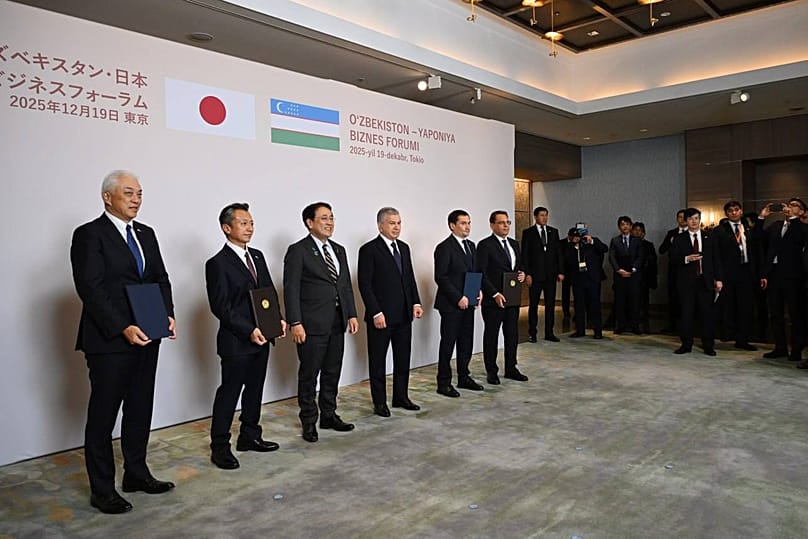
In 2024, trade turnover reached €365 million, up 64.1% year-on-year. Uzbekistan’s main exports to Japan include services, chemical products and industrial goods, while imports are dominated by cars and transport equipment.
Mirziyoyev outlined Uzbekistan’s development priorities, noting that the country’s GDP has doubled over the past eight years. By 2030, Uzbekistan aims to reach upper-middle-income status.
Japanese businesses were invited to participate in large-scale modernisation efforts, including renewable energy and energy storage, carbon-intensity reduction, deep processing of critical minerals, high-tech manufacturing, artificial intelligence and digitalisation.
With support from Japan Bank for International Cooperation (JICA), preparations are under way to establish a special economic zone in Uzbekistan based on Japanese standards and management models.
The business programme continued with meetings with Nobumitsu Hayashi, Governor of JICA, and Akihiko Tanaka, President of the Japan International Cooperation Agency (JBIC).
The JBIC project portfolio in Uzbekistan has exceeded €4.5 billion, covering energy, petrochemicals, telecommunications, infrastructure and healthcare, with additional projects worth more than €9 billion under preparation.
Meanwhile, cooperation with JICA has grown to over €7 billion, with new initiatives in healthcare, education, transport, agriculture and industrial development. Both sides confirmed readiness to launch projects supporting youth and women’s entrepreneurship, employment and poverty reduction.
Mirziyoyev met with Shingo Ueno, president of Sumitomo Corporation, and with Ichiro Takahara and Jun Inomata, heads of the Japanese organisations JOGMEC and ITOCHU.
The discussions focused on expanding cooperation in energy, natural resources, industry and investment, as well as advancing joint projects in priority sectors of Uzbekistan’s economy.
Official reception at the Akasaka Palace
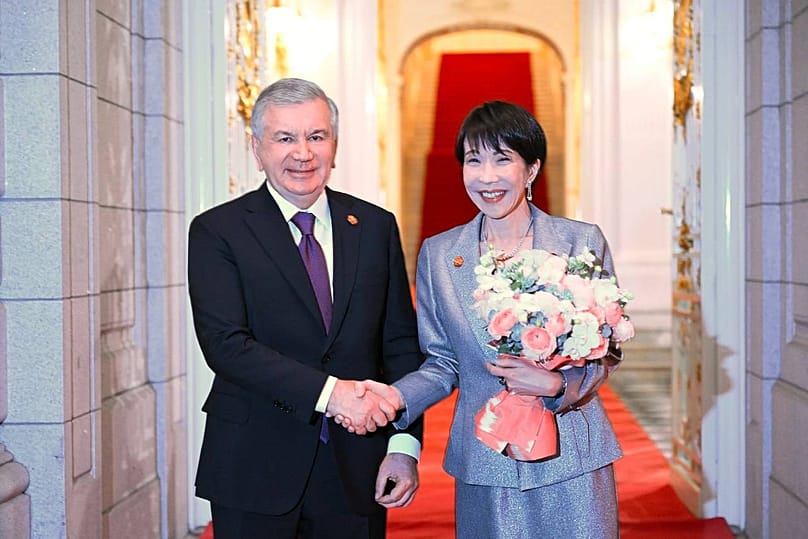
As part of the visit, Mirziyoyev attended an official reception hosted by Japan’s Prime Minister at the Akasaka Palace, held in honour of the heads of state of Central Asian countries.
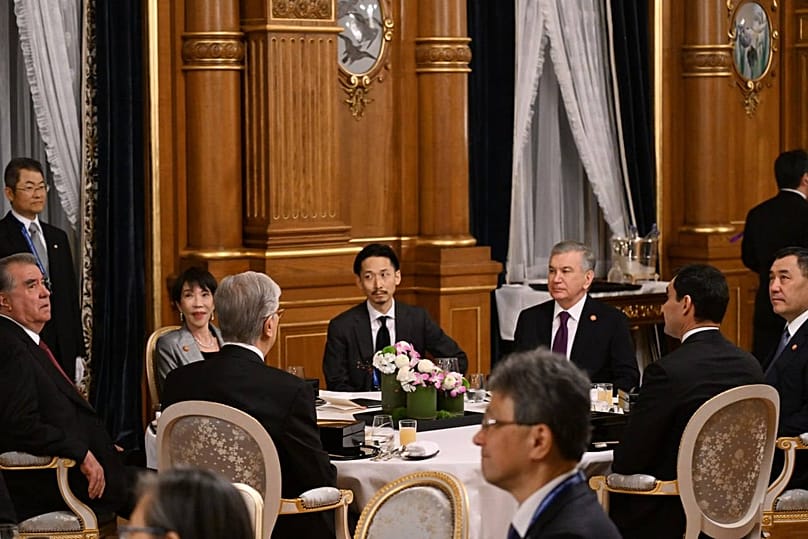
The event provided an additional platform for informal dialogue and showcased Japan’s interest in strengthening its engagement with Central Asia ahead of the upcoming Central Asia + Japan dialogue format.
Diplomatic relations between Uzbekistan and Japan were established in January 1992. Since then, cooperation has expanded steadily, encompassing human capital development and education, investment, and industrial growth.
The previous official visit by Mirziyoyev to Japan in December 2019 laid the foundation for the current strategic partnership, with more than 10 agreements signed across the economy, innovation, ICT, education and regional cooperation.