






























Italy's position is pivotal, as France, Hungary, Poland, and Austria oppose the deal, which requires the approval of a qualified majority for the EU executive chief Ursula von der Leyen to sign it.
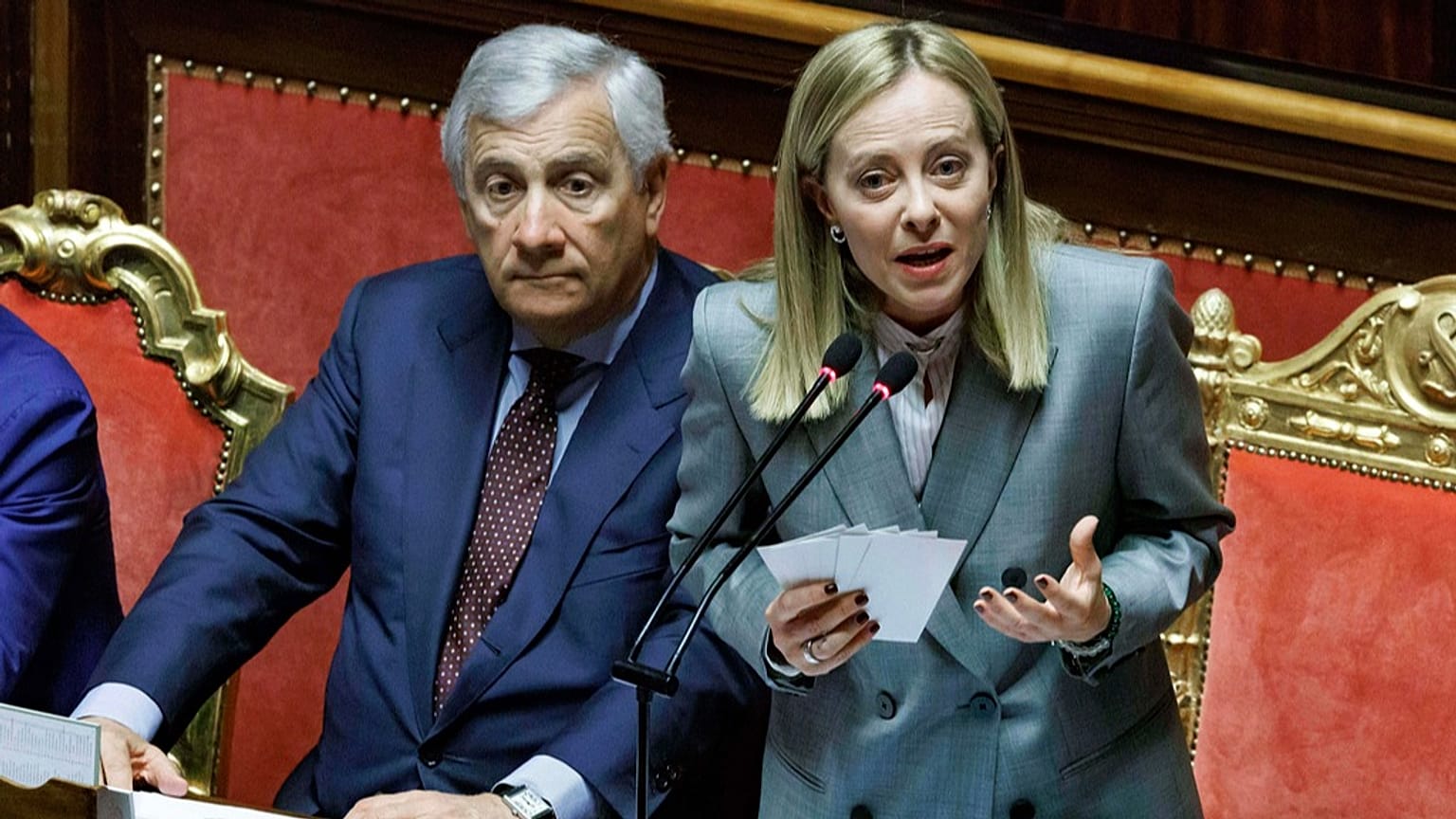
Signing the EU-Mercosur deal in the following days is "premature," Italian Prime Minister Giorgia Meloni said during an address to the Italian parliament in Rome on Wednesday.
Italy's hesitation to back the agreement would likely scuttle the European Commission's plan to sign the trade deal with South American countries on Saturday in Foz do Iguaçu, a border town between Argentina and Paraguay.
The Mercosur trade deal, struck by the European Commission in 2024 with Argentina, Brazil, Paraguay and Uruguay, would liberalise trade between the two blocs. Commission President Ursula von der Leyen had hoped to sign it on 20 December, but it first needs the backing of EU member states, which were due to vote this week.
Italy's position is pivotal, as France, Hungary, Poland, and Austria oppose the deal. France is leading opposition to the agreement, pressing for stronger safeguards to shield farmers from unfair competition from Mercosur imports and for a reciprocity clause that would require Mercosur producers to meet EU production standards.
Ireland and the Netherlands, despite past opposition, have not officially declared their position, while Belgium has said it will abstain.
That leaves Italy in the spotlight, as a qualified majority of 15 out of 27 member states representing at least 65% of the EU population is required to grant von der Leyen the mandate to ink it.
What Meloni wants
“It is necessary to wait for the package of additional measures to protect the agricultural sector to be finalised, explained and discussed with our farmers," Meloni said in her address to the Italian Chamber of Deputies ahead of the EU Council summit on Thursday.
“This does not mean that Italy intends to block or oppose (the deal), but we intend to approve the agreement only when it includes adequate guarantees of reciprocity for our agricultural sector," Meloni said.
"I am very confident that with the beginning of the new year, all these conditions can be met.”
A package of safeguards for the deal, designed to strengthen monitoring of the EU market in the event of a surge in imports from Latin America, was approved by the European Parliament on Tuesday, and should now be agreed with the member states.
According to Parliament sources, Italy's Agriculture Minister Francesco Lollobrigida has instructed his party's MEPs to propose amendments to the package that go further than the Commission's initial safeguard clause.
A key point requested by the European lawmakers is the "reciprocity clause," MEP Carlo Fidanza, head of the Brothers of Italy delegation at the Parliament, told reporters on Wednesday.
"Current safeguards are still not sufficient, too cumbersome to activate, and not protecting the principle of reciprocity," Fidanza said.
"We cannot allow the importation into the European market of products realised without respecting the environmental production standards, animal welfare standards, and the rules on the use of pesticides imposed on our producers."
According to him, the additional time invoked by Meloni should be used to strengthen these safeguards in support of the agricultural sector.
At the political level, Meloni's government faces pressure from Italian farmers' associations, which are opposing the deal.
Coldiretti, the main Italian farmers' network, will join a protest against the EU-Mercosur deal organised by the European agricultural sector on Thursday in Brussels.
It considers that the trade deal's approval should be "conditional on the introduction of real and binding safeguard principles and full reciprocity.”