





























The Montmartre flat where one of the most important French poets lived is threatened by a project to extend the adjoining Moulin-Rouge cabaret.
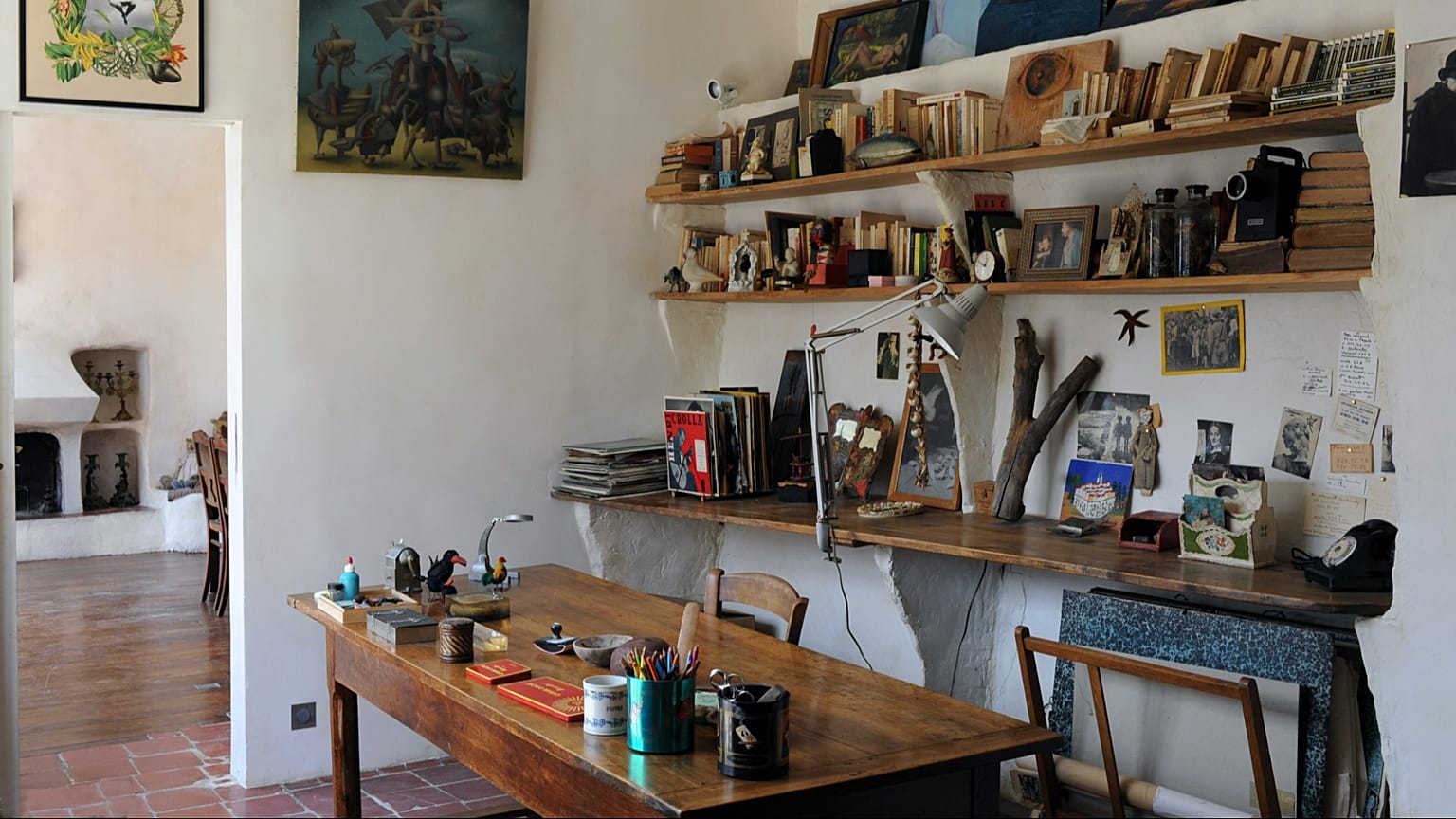
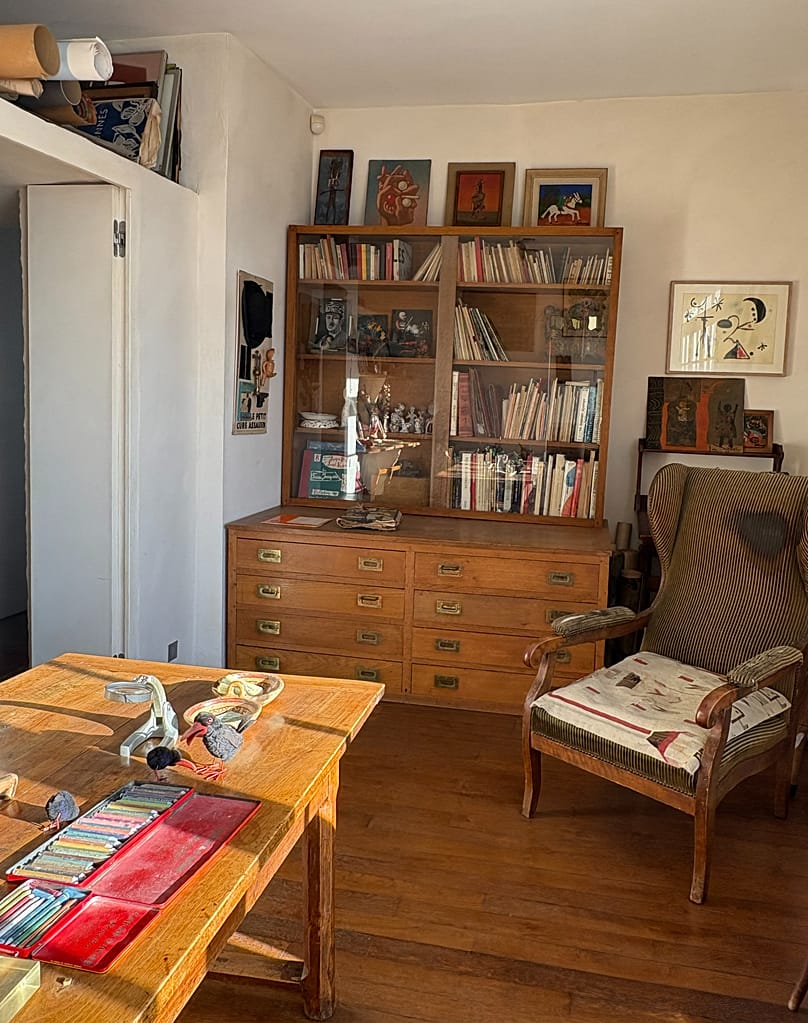
Whitewashed walls carved with niches, curved corners, floors covered with parquet and Provençal floor tiles, right in the middle of Montmartre. Inside, a desk, countless paintings and books, an advertisement for a convenience store television, hung with a drawing pin, pencils, scattered portraits of Brigitte Bardot and General Charles de Gaulle.
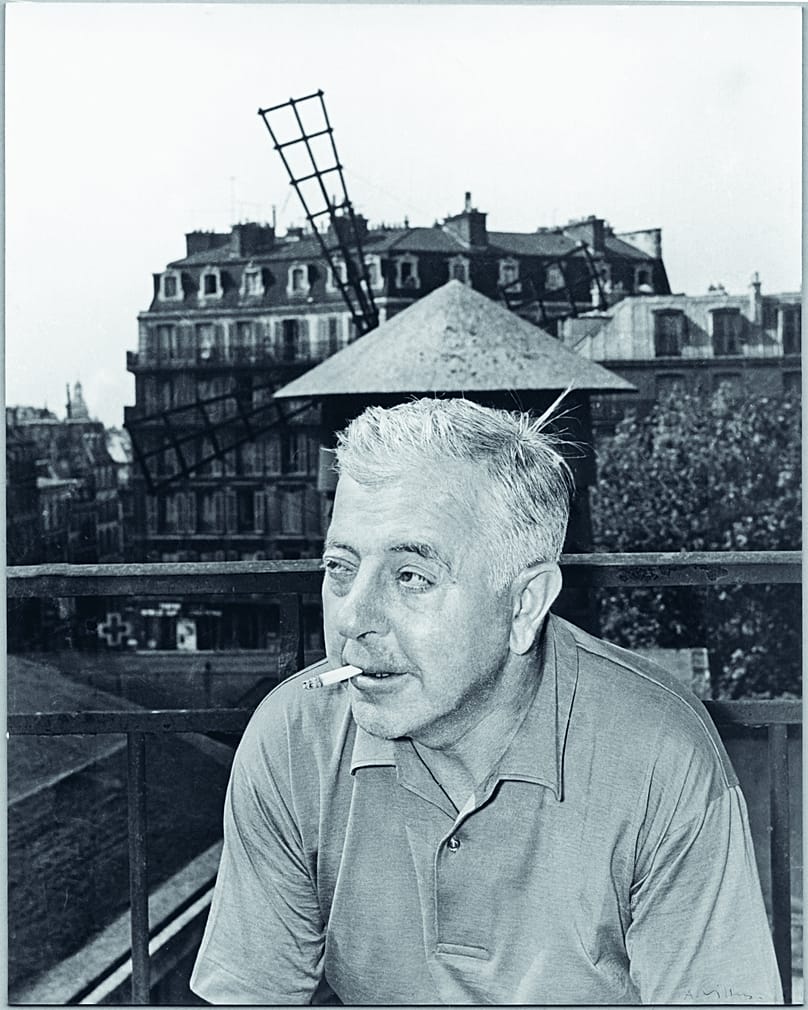
Jacques Prévert's flat at 6bis Cité Véron, in the backyard of the famous Moulin-Rouge cabaret, bright but not luxurious, which had previously always been open to the poet's famous contemporaries and anonymous friends, could soon cease to exist.
A battle for memory
The owner of the premises, the Moulin-Rouge cabaret, wants to reclaim this space, as well as the flat opposite, where the French music writer Boris Vian lived, for an expansion project that is causing ripples in the cultural world.
"I don't think this is respecting history," Eugénie Bachelot-Prévert, the poet's granddaughter, told Euronews. She is preserving his archives and is mobilising support to ensure that the flat does not end up "in a pile of rubble" but instead "can be visited and protected."
A petition to this effect, launched by her association "Chez Jacques Prévert," has already attracted more than 36,000 signatures.
At the same time, an open letter calling for the building to be listed as a historic monument was sent to the French Minister of Culture, Rachida Dati. The letter was signed by Nobel literature laureate Patrick Modiano, film-maker Costa-Gavras and singer Patti Smith.
"At a time when Parisians, and particularly the residents of Montmartre, are deploring the loss of authenticity of a public space given over to over-tourism, the disappearance of Jacques Prévert's flat, like that of his neighbour Boris Vian, which is the subject of the same project, would be utterly incomprehensible," the letter reads.
In France, the term "museum" can be used freely. Even without state recognition, it is still possible to discover the poet's Montmartre lair by booking a group visit via the HelloAsso platform.
Eugénie Bachelot-Prévert receives around two visitors a week and appointments are occasionally made by researchers working on Jacques Prévert's work, she explains.
No destruction, Moulin-Rouge says
The Prévert family have rented the premises since 1955. Last September, in a letter delivered by a bailiff, Eugénie Bachelot-Prévert was informed that the lease, which expired at the end of 2024, would not be renewed. The deadline for vacating the flat is 31 March 2026.
According to the president of the "Chez Jacques Prévert" association, the Moulin-Rouge company has not explained to the parties involved what it really intends to do with these square metres, even though there is talk of renovating the hall where Mistinguett, star of the Roaring Twenties, used to perform.
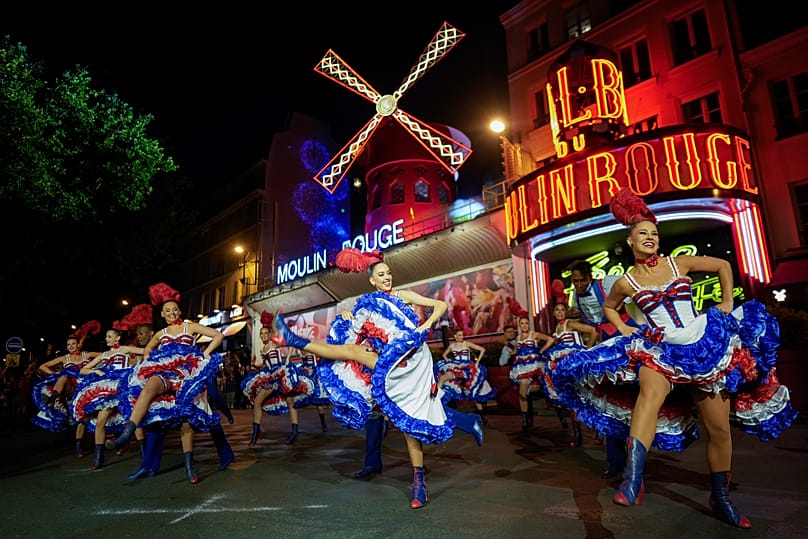
Contacted by Euronews, the Montmartre cabaret confirms that it is "considering a renovation project that would - among other things - enhance the legacy of Mistinguett, [...] a woman who is too often overlooked despite being a major figure in Parisian cultural life."
"We have never mentioned the destruction of the flats of Messrs Prévert and Vian," the Moulin-Rouge added.
Eugénie Bachelot-Prévert also refutes any idea of "moving" her grandfather's flat or reconstructing its interior elsewhere.
"That would be wrong," she insists. "We'd like to preserve the authenticity of the flat."
"Everyone's annoyed, because these are three French monuments"
The poet's heiress says she has no contact with the Minister of Culture, who she says is "close" to the Moulin-Rouge.
Claiming to be the spokesperson for "popular culture," Rachida Dati launched a "cabaret plan" this year to "support creation...increase the visibility and knowledge" of this world and promote its heritage.
The plan's flagship measure is a season dedicated to cabaret, which, according to the Ministry, will take place in autumn 2026, with "regional and national highlights."
Although she believes this policy is legitimate, Eugénie Bachelot-Prévert is also asking to be heard in the context where, according to her, the public authorities - from the arrondissement to the State, via the central town hall - would not wish to offend the mecca of the "French can-can."
"A strong economic player", she says.
"Let her protect the place, let her act as an intermediary [with the Moulin-Rouge]," she says in comments directed to Rachida Dati.
"Moulin-Rouge, Prévert, Vian...Everyone's in trouble, because these are three French monuments," admits the president of the association.
In a motion passed by the Paris City Council on a proposal from a Communist group last November, the capital's elected representatives called on the State to intervene "rapidly so that Jacques Prévert's flat is recognised and protected, in situ, in order to ensure its integral conservation, its protection against any damaging transformation and its opening to visitors, with respect for its memory, its cultural heritage and the history of Montmartre."
In a response to Euronews, the Ministry of Culture said that an application for protection as a historic monument submitted for Jacques Prévert's flat would be examined by the Île-de-France Regional Directorate for Cultural Affairs (DRAC).
"The Ministry [...] is closely monitoring this matter: it is currently in discussion with the heirs of Jacques Prévert, those of Boris Vian and the owners of the Moulin Rouge to find a solution that will allow the cabaret project to develop, while at the same time safeguarding the heritage associated with these two emblematic writers," it was stated on rue de Valois.
For its part, the Moulin-Rouge claims to be in "regular contactwith government departments," adding that a meeting is scheduled "very shortly" with Eugénie Bachelot-Prévert.
Prévert never fell into purgatory
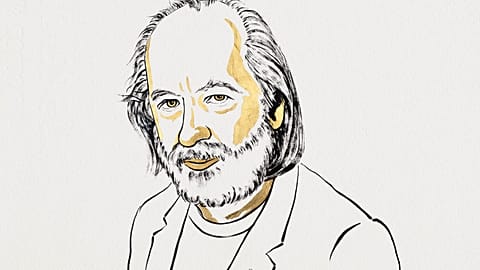
Anti-clerical and anarchistic, close to the communists, and long resistant to the idea of becoming a property owner, Jacques Prévert is world-famous for his poems – ‘Le cancre’, ‘Les feuilles mortes’, ‘Paris at night’, ‘Déjeuner du matin’ – and for the screenplay of Marcel Carné's cult film, ‘Les enfants du paradis’.
"Prévert is a national poet, on a par with Éluard and Char," Alban Cerisier, secretary general of Éditions Gallimard, told Euronews. "However, he enjoys a special status due to the widespread popularity of his first collection of poems, 'Paroles', which, with cumulative sales since 1946, must now exceed 4.5 million copies."
"This is a very unusual phenomenon, which in itself testifies to the place Prévert occupies in family libraries", said the heritage collection curator.
According to Alban Cerisier, annual sales of the poet's collections and albums are around 50,000 copies, "mostly consisting of sales of Paroles."
The publisher and historian also notes Jacques Prévert's ‘presence’ ‘through the number of libraries, cultural centres and schools that bear his name’ – Euronews has counted nearly 500.
"Prévert's poems circulate and live on through the voices of children," added Cerisier. "‘Le Cancre’, ‘En sortant de l'école’, ‘Page d'écriture’. As do the poet's legendary lines for cinema."
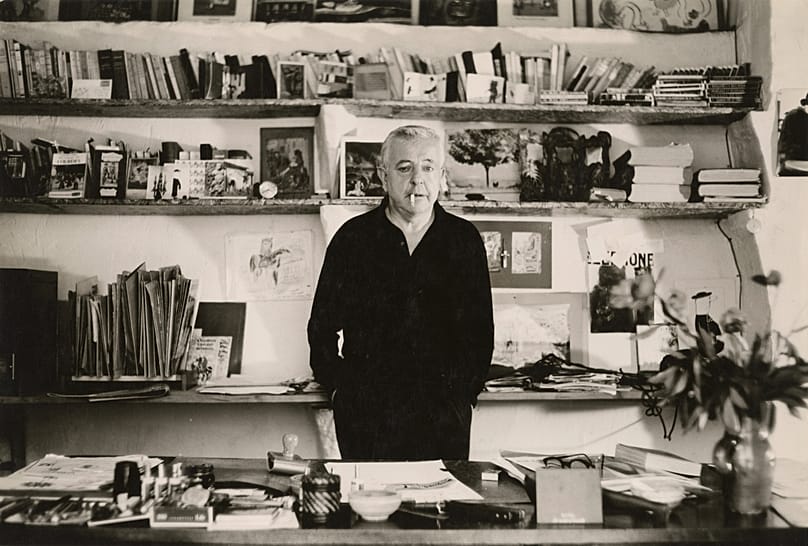
What Jacques Prévert was sometimes criticised for – the simplicity of his verses, his overly direct engagement – is precisely what makes him modern and important today.
"I believe that Prévert owes his enduring fame to the fact that his poetry, while being very finely composed and linked to the French poetic tradition (surrealism in particular), offers a simple, free and musical expression of human feelings," explained Cerisier.
Beyond his status as ‘schoolchildren's favourite poet’, Eugénie Bachelot-Prévert talks about a man, born in 1900, who ‘denounced war’ and ‘saw all the madness of the 20th century’. She praises the “liveliness” of his thinking, ‘which resonates very strongly’, and calls for ‘freedom and a different world’.
For the guardian of Jacques Prévert's memory, her grandfather "never fell into purgatory." Translated into 40 languages, he is "important beyond France," she says.
"With his simple, direct language, [Prévert] touched the hearts of a large number of Italians, especially when it came to his love poems," explained Paolo Levi, the Paris correspondent for the Italian news agency Ansa, interviewed by Euronews.
"I don't know if it's still true for the younger generations, but for decades it was common to meet people in Italy who quoted lines, if not whole poems of Prévert by heart," he said.
‘An ode to the eternal Parisian’
‘He is a poet of enduring significance, a classic who embodies something of the French spirit,’ said Cerisier, citing "an inalienable taste for freedom and social justice, mistrust of authority, a spirit of protest and, of course, the role of imagination and words in expressing human sensitivity and melancholy".
For him, Prévert also embodies the spirit of places – ‘those of Paris in particular’.
"His poetry speaks to the heart. It is neither scholarly nor complacent. It brings colour to intoxication. And his poetry is to Paris what Doisneau's photography is to the capital... an ode to the eternal Parisian, imbued with immense humanity."
"Paris would not be exactly Paris without what Prévert said about it," he concludes.
Sophia Khatsenkova contributed to this article.