


























An amendment to Italy's upcoming budget law proposes raising the ceiling for cash payments in the country. While some lawmakers are pushing for more 'consumer freedom', others fear the potential effect on tax evasion and criminal activity.
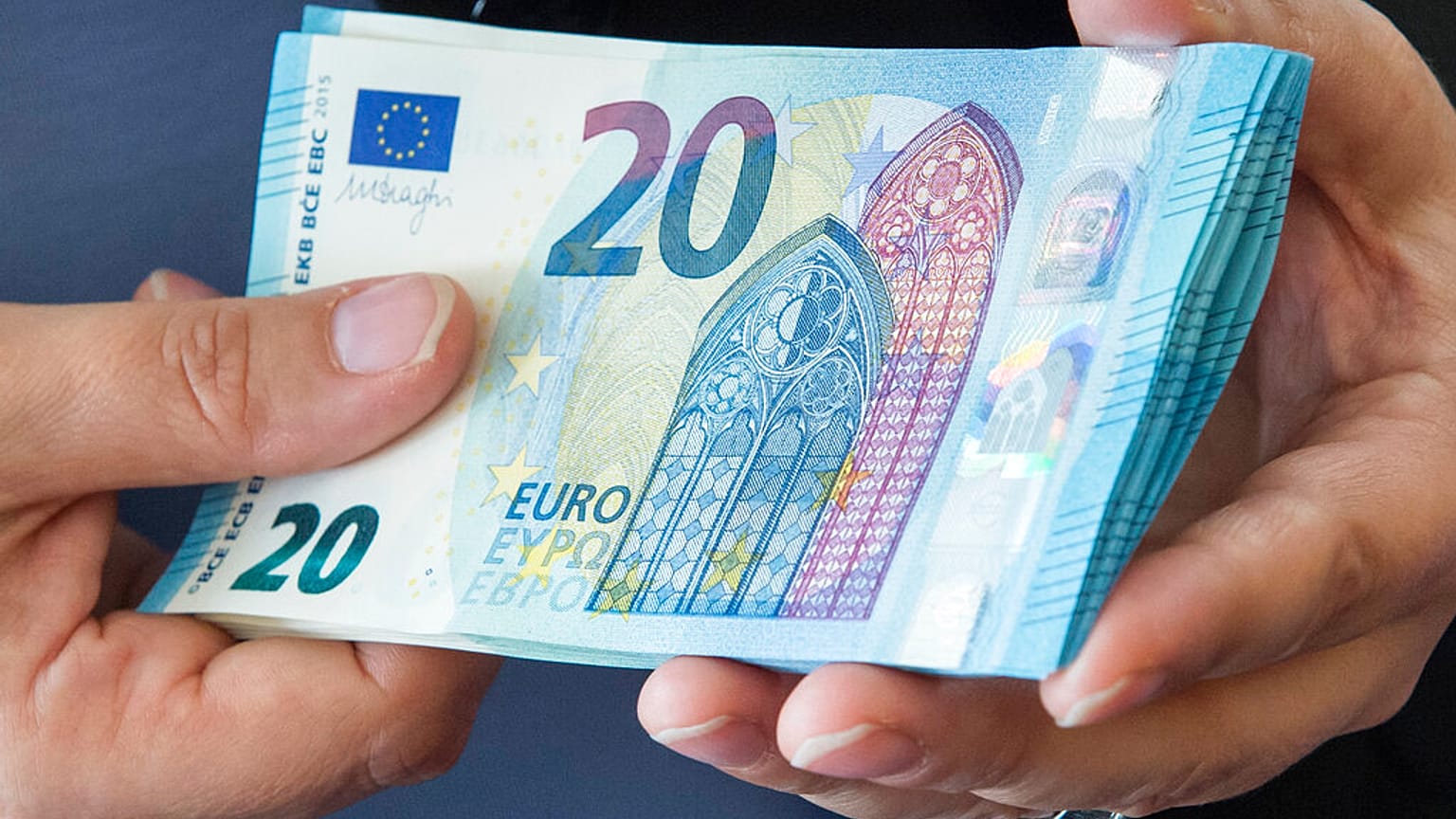
An amendment to Italy's upcoming budget law proposes to double the maximum limit for cash payments for individuals and businesses.
Critics are notably concerned that the policy, which raises the cap from the current €5,000 to €10,000, could worsen Italy's already-high level of tax evasion and facilitate money laundering.
The government and its parliamentary majority insist, however, that the measure will have no such impact on tax evasion.
The amendment to the 2026 Budget Law has been tabled by the Brothers of Italy party, led by Prime Minister Giorgia Meloni. It was, in fact, Meloni herself who introduced a first increase of the limit from €2,000 to €5,000 in 2022.
According to the Observatory on Italian Public Accounts of the Catholic University of Milan, tax evasion in Italy decreased from €105.8bn to €92.6bn between 2018 and 2022.
Exact estimates nonetheless differ, with the government suggesting that tax and social security evasion in 2022 ranged from €98.1bn to €102.5bn.
Meloni's first move to raise the cash ceiling came into effect on 1 January 2023, meaning that the true effect of the policy remains to be seen.
At the time, the Bank of Italy commented on the decision, noting that “although cash limits don't act as an absolute obstacle to illegal conduct, they represent a barrier for several forms of crime and evasion.”
There is also evidence that the use of electronic payments, which allow transactions to be traced, reduce tax evasion.
Italy's shadow economy
The current amendment also proposes a special stamp duty of €500, to be paid by those making a cash payment between €5,000 and €10,000.
There would be an obligation to issue an invoice on payments, although this could easily be circumvented through an agreement between the parties involved in the transaction.
Criticism of the government is mainly based on the specific characteristics of the Italian economy. An ISTAT report published last October paints a picture of shadow, underground transactions, meaning all those activities that are, for various reasons, not directly detectable.
They may involve irregular labour, drug production and trafficking, prostitution, or tobacco smuggling.
In 2023, according to ISTAT, the total value of the shadow economy and illegal activities reached a staggering €217.5bn in Italy. That marks a 7.5% year-on-year increase, corresponding to 10.2% of Italy’s GDP.
Deputy PM Salvini pushes for 'consumer freedom'
According to Deputy Prime Minister Matteo Salvini, raising the cash payment threshold to €10,000 is necessary because “people should be able to use their money as they wish. No one should have to justify what they have in their bank account.” The leader of the League party, speaking at the political Atreju festival, added: “We are not in Venezuela.”
The opposite stance is taken by the Democratic Party (PD) and the Greens and Left Alliance (AVS). According to PD senate leader Francesco Boccia, the proposal is “a desperate bid to secure money and political backing”.
Angelo Bonelli, co-spokesperson of Green Europe, said: “Instead of protecting work, it will open new spaces for the underground economy. It is a direct favour to tax evaders and an incentive for the black market."
Giacinto Palladino, head of the banking and insurance union First Cisl, told Euronews that “the use of cash has always been a channel that facilitates evasion and money laundering”. He added: “Given the thresholds, the main concern here is likely to be tax evasion rather than money laundering. However, in general, keeping limits low is clearly useful in combatting illegal activities.”
EU has set maximum cash cap
In 2024, the EU Council and European Parliament adopted a package of anti-money laundering and counter-terrorism financing measures.
Article 80 states that “persons trading in goods or providing services may accept or make a payment in cash only up to an amount of €10,000 or the equivalent in national or foreign currency, whether the transaction is carried out in a single operation or in several operations which appear to be linked.”
The €10,000 is, however, a limit and not a mandate to be reached, meaning Italy is free to impose a lower threshold.
The regulation is set to come fully into force in 2027.
Certain sectors are hotspots for tax evasion
European regulations aim primarily to prevent white-collar criminals from laundering money through the purchase of luxury cars or yachts, claimed Dutch Socialist MEP Paul Tang.
Italy has its own economic challenges to face, meaning it is normal for the cash legislation to be tailored to national interests.
According to First Cisl’s Palladino, cash is also used strategically in certain sectors. “We are talking about industries well known to everyone, like construction, textiles, and catering, where black-market payments are common. We know the mechanisms and hotspots, and police interventions often uncover highly organised networks. The reality is that national and European regulations should be much stricter.”
However, the president of the Senate Finance Commission, Massimo Garavaglia, disagrees. In an interview with Radio Radicale, he argued that “the point is not the use of cash but whether it is a result of evasion.”
“Propaganda is being created without relying on data. In Germany, the same limit exists and tax evasion is not so far from Italy’s,” said the League representative.
In reality, there is no ceiling on cash payments in Germany, although individuals are required to present an ID for transactions above €10,000 so they can be documented.
According to an analysis by the European Consumer Centre, there are no specific limits on cash payments in Austria, Cyprus, Estonia, Sweden, Finland, Ireland, and Luxembourg.
Partial limitations are in force in Malta, Hungary, Poland, Portugal, Romania, Slovakia, and Slovenia. Specific ceilings are in place in Belgium, Bulgaria, Croatia, Spain, France, Latvia, and Lithuania.